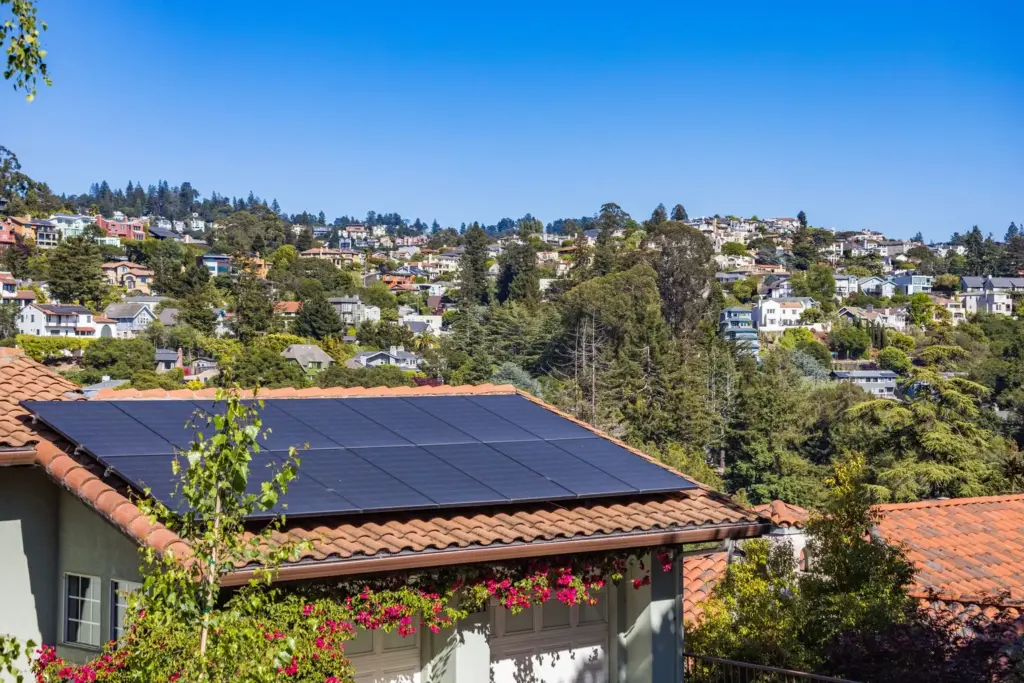
Austin homeowners spend an average of $2,004 per year on electricity, and that number climbs sharply for older homes with outdated insulation, single-pane windows, and aging HVAC systems. The good news: Austin’s municipal utility charges just $0.12 per kilowatt-hour, roughly 39% below the national average, according to EnergySage’s 2026 analysis of Travis County electricity costs. Combine that with one of the most generous local rebate programs in the country and it becomes clear why energy-efficient upgrades in Austin deliver faster payback periods than almost anywhere else in Texas.
Austin launched the nation’s first green building program in 1990 through Austin Energy Green Building (AEGB), and more than three decades later, the city remains a leader in sustainable residential construction. Whether you are shopping for a net-zero new build in Whisper Valley, retrofitting a 1970s ranch in South Austin with spray foam and a heat pump, or simply trying to understand what a HERS rating means before you make an offer, this guide covers every angle of green and energy-efficient homeownership in Austin for 2026.
Why Energy Efficiency Matters More in Central Texas
Texas runs hot. Austin averages 115 days per year above 90 degrees, and HVAC accounts for roughly 50% of a typical home’s energy consumption in Climate Zone 2. That makes cooling the single largest controllable expense for homeowners in the region.
Three factors make Austin’s energy landscape unique:
- Municipal utility pricing. Austin Energy is a city-owned utility, not part of the deregulated ERCOT retail market. Rates are stable and predictable at approximately $0.12/kWh, but you cannot shop for a cheaper provider. Efficiency upgrades are the primary lever you control.
- No state income tax, higher property taxes. Texas homeowners already carry a heavy property tax burden (1.6% to 2.2% effective rates in the Austin metro). Reducing monthly utility bills by $100 to $200 through efficiency upgrades provides real relief without adding to the tax load.
- Grid vulnerability. Winter Storm Uri in 2021 and subsequent summer heat events exposed the ERCOT grid’s limitations. Homes with strong thermal envelopes, battery backup, and solar panels weathered those events far better than conventionally built homes.
Understanding Energy Ratings: The HERS Index
The Home Energy Rating System (HERS) Index is the industry standard for measuring a home’s energy efficiency. Developed by RESNET (Residential Energy Services Network), it works on a simple scale: a standard code-built new home scores 100, and a net-zero energy home scores 0. Every point below 100 represents a 1% improvement in efficiency over code.
| HERS Score | What It Means | Typical Annual Energy Cost (Austin) |
|---|---|---|
| 130-150 | Older existing home (pre-2000) | $2,800-$3,500+ |
| 100 | Standard new code-built home | $2,000-$2,200 |
| 70-85 | Energy Star certified | $1,400-$1,700 |
| 50-65 | High-performance / AEGB 3-4 star | $1,000-$1,300 |
| 30-45 | DOE Zero Energy Ready | $600-$900 |
| 0-15 | Net-zero (produces as much as it consumes) | $0-$300 |
The State of Texas now requires a maximum Energy Rating Index (ERI) score of 57 for new homes in Climate Zone 2 under the 2024 International Energy Conservation Code (IECC), which Austin adopted with an effective date tied to the July 10, 2025 implementation. That is a significant step up from previous codes and means every new home built in Austin is already more efficient than what was standard just five years ago.
A HERS rating costs approximately $375 for the testing itself, performed by a certified HERS rater who conducts a blower door test and duct leakage test. If you are buying a home and want to understand its true energy performance before closing, requesting a HERS rating during the option period is one of the smartest investments you can make.
Austin Energy Green Building: America’s First Green Building Program
Austin Energy Green Building (AEGB) launched in 1990 as the first green building program in the United States. It predates LEED by eight years and Energy Star Homes by five years. The program rates projects on a 1-to-5-star scale based on a points system covering energy efficiency, water conservation, materials, site development, and indoor environmental quality.
The 2026 rating update, currently in development (January through October 2026), responds to the 2024 IECC adoption and the City of Austin Climate Equity Plan. Key goals include alignment with Austin Water Forward, the Zero Waste by 2040 plan, and Austin Energy’s Resource, Generation and Climate Protection Plan to 2035.
For homebuyers, the AEGB star rating is a quick indicator of a home’s green performance:
- 1 Star: Meets minimum green building requirements beyond code
- 2 Stars: Meaningful improvements in efficiency and water conservation
- 3 Stars: High-performance home with significant energy savings
- 4 Stars: Exceptional efficiency, typically 40%+ above code
- 5 Stars: Near net-zero or net-zero energy performance
AEGB participation is voluntary for most residential projects, but the program influences Austin’s building culture. Many local builders pursue 3-star or higher ratings as a market differentiator, and the program’s case studies library showcases dozens of Austin homes that demonstrate what high-performance construction looks like in practice.
Energy Star Certification for Homes
Energy Star certified homes are at least 10% more energy efficient than homes built to minimum code requirements, with typical savings of 20% to 30% on energy bills compared to standard new construction. In Texas, homes must meet National Program Requirements Version 3.1 for certification.
The financial case for Energy Star certification extends beyond monthly savings. A study of homes in Austin and Round Rock found that Energy Star certified homes sold for an average 6% premium over comparable non-certified homes between 2009 and 2016. On a $500,000 home, that translates to $30,000 in additional equity.
Energy Star certification requirements include:
- Third-party verification by a HERS rater
- Thermal enclosure system (insulation, air sealing, windows)
- Efficient HVAC system properly sized and installed
- Comprehensive water management system
- Energy-efficient lighting and appliances
New construction builders pursuing Energy Star certification pay approximately $2,500 to $5,000 in additional construction costs per home, but the resale premium and energy savings more than offset that investment. For buyers, asking whether a builder offers Energy Star certification is one of the simplest ways to ensure you are getting a well-built, efficient home.
Net-Zero Homes: Whisper Valley and Beyond
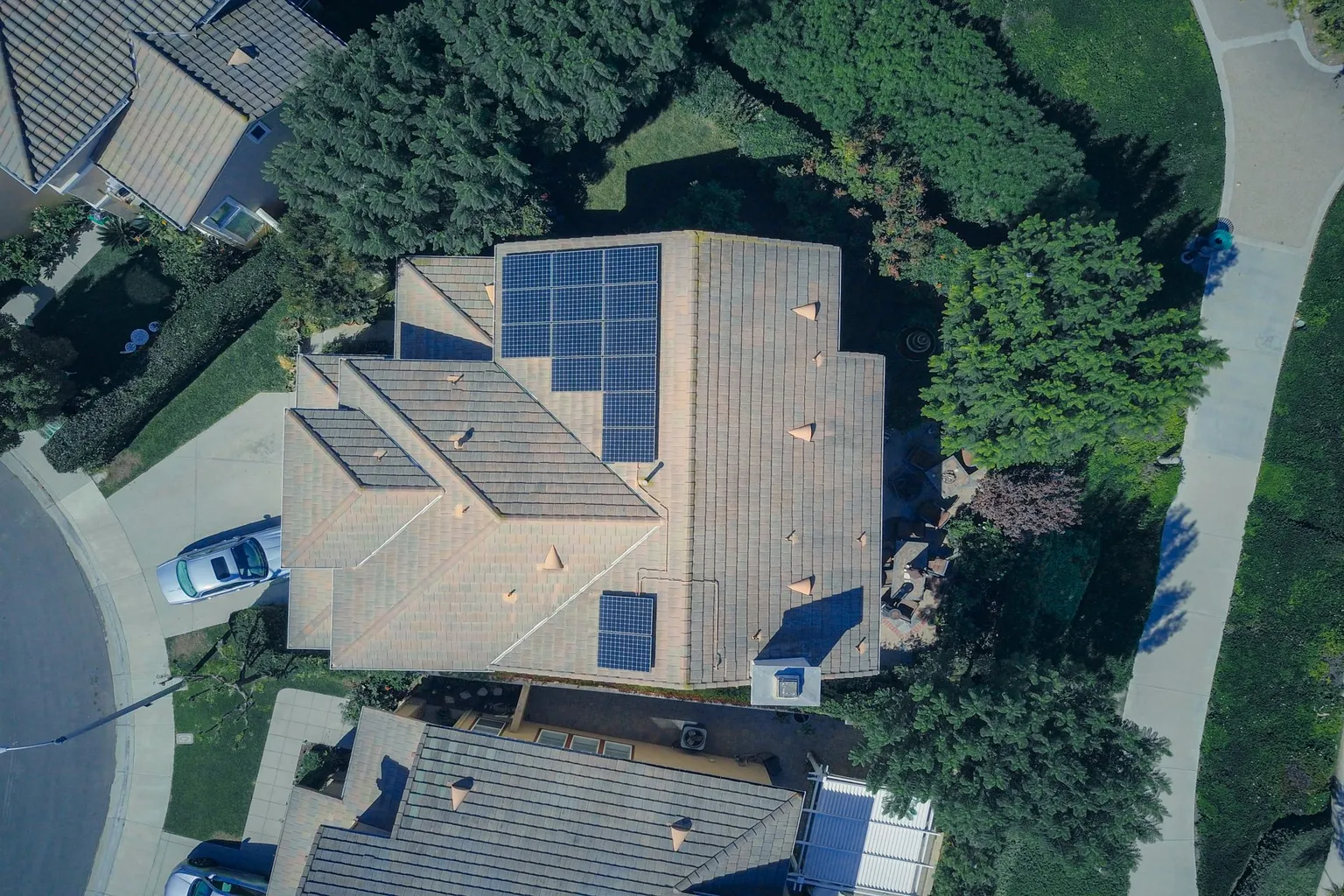
A net-zero energy home produces at least as much energy as it consumes over the course of a year. In Austin, the most prominent example is Whisper Valley, a 2,000-acre master-planned community near Manor that is one of the largest geothermal housing developments in the United States.
Every home in Whisper Valley comes equipped with a geothermal heat pump connected to the community’s centrally installed GeoGrid, a shared geothermal loop system that taps into the earth’s constant underground temperature to heat and cool homes. The system reduces HVAC energy consumption by up to 80% compared to conventional systems, according to the developer’s published data.
Whisper Valley home prices range from the mid-$300s to $750,000 depending on builder and floor plan. Buyers should factor in the geothermal assessment (called an Energy Sharing System or ESS fee) of $55 to $70 per month, plus Public Improvement District (PID) assessments of $1,480 to $2,004 per year. Even with these additional costs, total housing expenses including utilities often come in lower than comparable conventionally built homes in the Austin metro.
Beyond Whisper Valley, several Austin builders specialize in net-zero construction:
- Austin Touchstone Builders constructs certified Passive House and DOE Zero Energy Ready homes using Insulated Concrete Form (ICF) construction. Their homes cut energy bills by approximately 80% and can withstand 250-mph winds.
- SOL Austin developed a modern sustainable community in East Austin with 4-to-5-star AEGB-rated, net-zero energy capable homes ranging from 1,000 to 1,800 square feet.
- Oliver Custom Homes builds net-zero custom homes in the Austin area with full energy modeling and solar integration.
Ed Neuhaus, broker of Neuhaus Realty Group, notes that buyer interest in net-zero and near-net-zero homes has increased significantly since 2023. “Especially among relocators from California and the Pacific Northwest, energy performance is becoming a real factor in the home search, not just a nice-to-have.”
Passive House and DOE Zero Energy Ready Homes
The Passive House standard (certified by PHIUS in the United States) represents the most rigorous energy performance standard for residential construction. Passive House homes use 40% to 60% less energy for heating and cooling than even high-performance code-built homes, achieved through:
- Continuous insulation with no thermal bridges
- Airtight building envelope (0.6 ACH50 or less, compared to the 2024 IECC requirement of 3.0 ACH50 in Climate Zone 2)
- High-performance triple-pane windows
- Heat recovery ventilation (HRV or ERV)
- Minimal mechanical heating and cooling
The DOE Zero Energy Ready Home (ZERH) program, administered by the U.S. Department of Energy, provides a more accessible path to ultra-high performance. ZERH homes must meet Energy Star Version 3.1 requirements, EPA Indoor airPLUS, and DOE-specific envelope and HVAC requirements. They are designed so that adding solar panels would make them net-zero.
FORGE CRAFT Architecture + Design built a notable 2,100-square-foot ZERH-certified custom home in Austin that uses 75% less energy than typical new homes, earning dual certification from both PHIUS and AEGB.
The Building Envelope: Insulation, Air Sealing, and Windows
The building envelope is the single most important factor in a home’s energy performance. In Central Texas, where cooling dominates the energy budget, keeping conditioned air in and hot air out is the top priority.
Insulation
Insulation effectiveness is measured in R-value (resistance to heat flow). Higher R-values mean better insulation. The 2024 IECC requires minimum R-38 in attics and R-13 in walls for Climate Zone 2, but high-performance homes exceed these minimums significantly.
| Insulation Type | R-Value per Inch | Cost per Sq Ft (Austin) | Best For |
|---|---|---|---|
| Blown-in cellulose | 3.2-3.8 | $1.50-$2.50 | Attics, retrofit walls |
| Open-cell spray foam | 3.5-3.7 | $1.50-$2.50 | Walls, rooflines (also air seals) |
| Closed-cell spray foam | 6.0-7.0 | $3.00-$4.50 | Crawlspaces, exterior walls, moisture barrier |
| Mineral wool batts | 3.0-4.2 | $1.00-$2.00 | Walls, fire resistance |
| Rigid foam board | 3.8-6.5 | $0.75-$2.00 | Exterior continuous insulation |
Spray foam insulation serves double duty in Austin’s climate because it both insulates and air-seals simultaneously. While it costs significantly more than blown-in cellulose, the combined performance often delivers faster payback. A typical 2,000-square-foot home in Austin costs $3,000 to $5,000 for blown-in cellulose attic insulation versus $8,000 to $15,000 for full spray foam coverage.
Air Sealing
Air leakage accounts for 25% to 40% of heating and cooling energy loss in a typical home, according to the Department of Energy. Common leak points in Austin homes include:
- Recessed can lights (especially in older homes)
- Electrical outlets on exterior walls
- Plumbing and HVAC penetrations
- Attic access hatches
- Window and door frames
- Rim joists and sill plates
A blower door test, which measures the airtightness of a home, typically costs $150 to $300 and is included in most comprehensive energy audits. The test result is expressed in air changes per hour at 50 Pascals (ACH50). The 2024 IECC requires 3.0 ACH50 or less for new construction in Austin. High-performance homes target 1.5 ACH50 or lower, and Passive House certification requires 0.6 ACH50.
Windows
In Austin’s hot climate, windows are a major source of heat gain. The key specifications to evaluate are:
- U-factor: Measures heat transfer. Lower is better. Energy Star requires U-0.30 or less for Climate Zone 2.
- Solar Heat Gain Coefficient (SHGC): Measures how much solar radiation enters through the glass. Lower SHGC blocks more heat. Energy Star requires 0.25 or less for south-facing and west-facing windows in Austin.
- Low-E coating: Microscopically thin metallic coating that reflects infrared heat. Standard on all modern energy-efficient windows.
Replacing single-pane windows with Energy Star-rated double-pane Low-E windows in a 2,000-square-foot Austin home typically costs $8,000 to $20,000 and can reduce cooling costs by 15% to 25%.
HVAC: Heat Pumps and High-Efficiency Systems
Heating and cooling represent the largest energy expense in Austin homes. The shift toward heat pump technology is one of the most significant trends in residential energy efficiency.
A heat pump does not generate heat; it moves it. In cooling mode, it works like a traditional air conditioner, extracting heat from indoor air. In heating mode, it reverses the process, pulling heat from outdoor air (even in cold weather) and transferring it inside. Modern heat pumps operate at 200% to 400% efficiency (expressed as a Coefficient of Performance, or COP), meaning they deliver 2 to 4 units of heating or cooling energy for every 1 unit of electricity consumed.
For Austin’s climate, where heating demands are modest, air-source heat pumps are the most cost-effective option:
| System Type | Installed Cost (Austin) | Annual Operating Cost | Lifespan |
|---|---|---|---|
| Standard central AC + gas furnace | $6,000-$12,000 | $1,800-$2,400 | 15-20 years |
| High-efficiency heat pump (SEER2 16+) | $8,000-$15,000 | $1,200-$1,600 | 15-20 years |
| Mini-split heat pump (ductless) | $3,000-$8,000 per zone | $800-$1,200 | 20+ years |
| Geothermal heat pump | $20,000-$40,000 | $600-$1,000 | 25-50 years (ground loop) |
The SEER2 (Seasonal Energy Efficiency Ratio) rating is the key metric for cooling efficiency. The federal minimum for new systems in Texas is SEER2 15.0 as of January 2023. Energy Star-qualified systems are SEER2 16.0 or higher. Top-tier systems reach SEER2 22 to 26.
Water Heating: The Case for Heat Pump Water Heaters
Water heating is the second-largest energy expense in most homes, accounting for approximately 18% of total energy use. Heat pump water heaters (also called hybrid electric water heaters) use 60% to 70% less energy than standard electric tank water heaters.
A heat pump water heater works by extracting heat from the surrounding air and transferring it to the water tank. In Austin’s warm climate, they perform exceptionally well year-round. As a bonus, they slightly cool and dehumidify the space where they are installed, which is useful in a garage or utility room.
The numbers tell the story:
- Standard electric tank (50 gal): $500 to $1,000 installed, $550+ per year to operate
- Heat pump water heater (50 gal): $2,500 to $5,000 installed, $150 to $200 per year to operate
- Annual savings: approximately $350 to $400
- Payback period: 3 to 7 years (faster with Austin Energy’s $1,000 rebate)
Austin Energy currently offers a $1,000 rebate for installing an Energy Star certified heat pump water heater, bringing the effective cost close to a conventional unit while delivering decades of lower operating costs.
Austin Energy Rebates and Incentives (2026)
Austin Energy operates one of the most comprehensive residential rebate programs of any utility in the country. Here is what is available in 2026:
| Upgrade | Rebate Amount | Additional Benefits |
|---|---|---|
| Home solar system | $2,500 | Value of Solar credit at 9.91 cents/kWh |
| Battery storage (Power Partner) | $500 + avg $750/year | Grid support rewards |
| Heat pump water heater | $1,000 | Must be Energy Star certified |
| Whole-home energy improvements | Avg $3,000 | 0% financing available |
| Weatherization upgrades | Avg $1,500 | Insulation, air sealing, duct sealing |
| Smart thermostat | $50 | Power Partner: up to $75/year in bill credits |
The whole-home energy improvement program deserves special attention. Austin Energy will conduct an energy assessment, recommend improvements, and provide rebates averaging $3,000 along with 0% financing for qualifying upgrades. For homeowners with older, less efficient homes, this program can reduce annual energy costs by 20% to 40% with minimal out-of-pocket expense.
For detailed information on solar panel installation, costs, and the Value of Solar program, see the Complete Guide to Solar Panels in Austin.
Federal Tax Credits: What Is Available in 2026
The federal energy efficiency landscape shifted significantly at the end of 2025. The Energy Efficient Home Improvement Credit (Section 25C), which provided up to $3,200 per year for heat pumps, insulation, windows, and other efficiency upgrades, expired on December 31, 2025.
What remains for 2026:
- Residential Clean Energy Credit (Section 25D): The 30% tax credit for solar panels, battery storage, and geothermal heat pumps is scheduled to remain available through 2032, stepping down to 26% in 2033 and 22% in 2034. However, legislative changes could affect this timeline. Consult a tax professional for current eligibility.
- New energy efficient home credit (Section 45L): Builders can claim up to $2,500 for constructing Energy Star certified homes and apartments. This credit may affect pricing on new construction.
The expiration of Section 25C makes local utility rebates, like those from Austin Energy, even more valuable. It also reinforces the importance of evaluating energy efficiency at the time of purchase rather than relying on post-purchase upgrades with federal incentive support.
Green Home Builders in Austin
Austin’s green building community is among the most established in the country, reflecting over 30 years of AEGB influence on local construction practices. Several builders specialize in energy-efficient and sustainable construction:
Build Native takes a holistic approach to green building, incorporating solar panels, potable rainwater harvesting, standing seam metal roofs, advanced framing with full-envelope spray foam insulation, and energy-efficient windows. Their custom homes consistently achieve 3-star or higher AEGB ratings.
Austin Touchstone Builders is the area’s leading net-zero and Passive House builder. Their Insulated Concrete Form (ICF) construction method creates an extremely airtight, well-insulated building envelope that requires minimal mechanical heating and cooling. All their homes can be certified through the DOE Zero Energy Ready Home program.
Younger Homes builds sustainable custom and semi-custom homes in the Texas Hill Country, integrating green construction practices with the architectural character of the region.
Weston Dean Custom Homes incorporates proven green building practices in both Austin and San Antonio, focusing on building envelope performance, efficient mechanical systems, and indoor air quality.
Verde Builders operates their SmartHouse Design brand throughout greater Austin, creating energy-efficient home designs that balance performance with affordability.
When evaluating a new construction builder’s green credentials, ask for:
- HERS scores from recently completed homes
- AEGB star rating participation history
- Blower door test results from recent builds
- Specific insulation types, R-values, and HVAC specifications
- Whether Energy Star or ZERH certification is included or available
For a broader look at the new construction process, see the Complete Guide to New Construction Homes in Austin and the Complete Guide to Building a Custom Home in Austin.
Buying an Existing Home: How to Evaluate Energy Efficiency
Most homebuyers in Austin are purchasing existing homes, not new construction. Evaluating energy efficiency on a resale home requires a different approach than checking a builder’s AEGB rating.
Before You Tour
- Check the listing for efficiency features. Solar panels, recent HVAC replacement, upgraded insulation, and double-pane windows are often mentioned in MLS remarks.
- Look at the home’s age and construction type. Homes built after 2015 meet stricter energy codes. Pre-2000 homes often have significant efficiency gaps.
- Request utility bills. Sellers can authorize release of 12 months of Austin Energy bills, giving you actual energy costs by season.
During the Option Period
- Order a HERS rating ($375). This gives you a quantified energy score to compare against other properties and identify the most impactful upgrades.
- Add an energy audit to your home inspection. Many Austin inspectors offer thermal imaging add-ons that reveal insulation gaps and air leaks.
- Check the HVAC system. A 15-year-old system operating at SEER 10 costs roughly twice as much to run as a modern SEER2 16 system. Factor replacement costs into your offer.
- Inspect the attic. In Central Texas, attic insulation is the most common deficiency. If you see bare rafters or less than 10 inches of insulation, plan for an upgrade.
- Check window types. Single-pane aluminum windows, common in homes built before 1990, are significant energy liabilities in Austin’s summer heat.
Negotiation Leverage
Energy deficiencies can be powerful negotiation tools. If the home’s HERS score reveals it is significantly less efficient than similar properties, you can quantify the annual cost difference and negotiate accordingly. A home with a HERS score of 130 versus a comparable home scoring 85 might cost $1,200 to $1,500 more per year in energy, which represents real value the seller’s asking price may not account for.
Green Certifications and Resale Value
The data consistently shows that energy-efficient homes command a price premium at resale. According to research published in the Journal of Sustainable Real Estate, homes with green certifications sell for 2% to 8% more than comparable non-certified homes, with the premium varying by market, certification type, and efficiency level.
Specific findings relevant to Austin:
- Energy Star (Austin/Round Rock): 6% average sales price premium
- Pearl Certified (multiple markets): 3% to 5.5% premium
- Higher efficiency = higher premium: Homes in the top efficiency tier consistently outperform moderately efficient homes by 2 to 3 additional percentage points
- Faster sales: Green-certified homes spend fewer days on market on average
On a $500,000 Austin home, a 6% Energy Star premium represents $30,000 in additional value. Even accounting for the $3,000 to $5,000 in additional construction costs for certification, the return on investment is substantial.
For sellers, marketing green features effectively matters. Listing descriptions should include specific certifications, HERS scores, estimated annual energy costs, and specific upgrade details (insulation R-values, SEER ratings, window specifications). Generic language like “energy efficient” does not have the same impact as “HERS score 62, Energy Star certified, spray foam insulation, SEER2 18 heat pump.”
For more on maximizing your home’s value through improvements, see the Complete Guide to Home Renovations That Add Value in Austin.
Energy Audits: Your Starting Point for Upgrades
Before spending money on energy upgrades, an energy audit identifies the most impactful improvements for your specific home. Austin Energy offers assessments through their whole-home improvement program, but you can also hire an independent auditor.
What an energy audit includes:
- Blower door test: Measures overall air leakage (ACH50)
- Duct leakage test: Identifies leaks in HVAC ductwork (common in Austin attics where temperatures reach 140+ degrees)
- Thermal imaging: Reveals insulation gaps, thermal bridges, and moisture intrusion
- HVAC evaluation: Assesses system efficiency, sizing, and airflow
- Utility bill analysis: Identifies seasonal patterns and anomalies
Cost ranges for energy audits in Austin:
- Level 1 (basic walkthrough): $100 to $250
- Level 2 (with diagnostic testing): $250 to $650
- HERS rating (full certification): approximately $375
- Austin Energy program assessment: often no cost for qualifying customers
Hill Country Insulation and other local firms offer no-cost energy assessments that include blower door tests and infrared thermal imaging, providing a low-risk way to identify which improvements will have the largest impact on your comfort and energy bills.
Upgrade Priorities: Where to Spend First
Not all energy upgrades deliver the same return. For Austin homes, the following priority order typically maximizes savings per dollar spent:
| Priority | Upgrade | Typical Cost | Annual Savings | Payback |
|---|---|---|---|---|
| 1 | Attic insulation + air sealing | $2,000-$5,000 | $300-$600 | 4-8 years |
| 2 | Duct sealing and insulation | $1,000-$3,000 | $200-$400 | 3-7 years |
| 3 | Smart thermostat | $150-$300 | $100-$200 | 1-2 years |
| 4 | Heat pump water heater | $2,500-$5,000 | $350-$400 | 3-7 years |
| 5 | HVAC upgrade (heat pump) | $8,000-$15,000 | $400-$800 | 10-15 years |
| 6 | Window replacement (Low-E) | $8,000-$20,000 | $300-$500 | 15-25 years |
| 7 | Solar panels | $15,000-$30,000 | $1,200-$2,000 | 7-12 years |
The lesson is clear: start with the boring stuff. Insulation and air sealing are not glamorous, but they deliver the fastest payback in Austin’s climate. A home with excellent insulation and a mediocre HVAC system will outperform a home with poor insulation and a top-of-the-line heat pump every time.
For information on smart home technology that can enhance energy management, including smart thermostats, energy monitors, and automated lighting, see our dedicated guide.
LEED for Residential Projects
LEED (Leadership in Energy and Environmental Design), administered by the U.S. Green Building Council, is the most widely recognized green building certification globally. The LEED for Homes rating system evaluates residential projects across eight categories: integrative process, location and transportation, sustainable sites, water efficiency, energy and atmosphere, materials and resources, indoor environmental quality, and innovation.
LEED certification levels are Certified, Silver, Gold, and Platinum, based on total points earned. While LEED is more common in commercial and multifamily projects in Austin, some custom home builders pursue LEED certification for single-family homes. The certification process adds $5,000 to $15,000 in soft costs (consulting, documentation, verification) beyond any additional construction costs for green features.
For most Austin homebuyers, AEGB and Energy Star certifications provide more locally relevant and cost-effective benchmarks than LEED for single-family homes. LEED becomes more relevant when evaluating condos and multifamily buildings, where the certification may cover common areas and shared systems.
Water Conservation: The Other Half of Green
Green building in Austin extends beyond energy efficiency. Water conservation is critical in a region where drought conditions are recurring and the Edwards Aquifer faces increasing demand.
Water-efficient features to look for in Austin homes:
- Rainwater harvesting: Austin offers fee waivers for development with rainwater collection systems. Some builders, like Build Native, include potable rainwater harvesting as a standard feature.
- WaterSense fixtures: EPA-certified faucets, showerheads, and toilets that use 20% less water than standard fixtures
- Smart irrigation: Weather-based controllers that adjust watering based on actual conditions, reducing landscape water use by 15% to 30%
- Native landscaping: Xeriscaping with native Texas plants reduces irrigation needs by 50% to 75% compared to traditional turf lawns
- Greywater systems: Permitted in Austin for landscape irrigation, reusing water from showers and washing machines
Austin Water’s conservation stage restrictions during drought can severely limit outdoor water use. Homes designed with water efficiency in mind are less affected by these restrictions and maintain their curb appeal even during water-short periods.
Indoor Air Quality: The Health Side of Green Building
Energy-efficient homes that are tightly sealed require mechanical ventilation to maintain healthy indoor air quality. Without it, moisture, volatile organic compounds (VOCs), and other pollutants can accumulate.
Key indoor air quality features in green homes:
- ERV or HRV systems: Energy Recovery Ventilators (ERVs) are preferred in Austin’s humid climate because they transfer both heat and moisture between incoming and outgoing air streams, maintaining efficiency while providing fresh air
- Low-VOC materials: Paints, adhesives, cabinets, and flooring certified for low chemical emissions
- MERV-13 filtration: Higher-grade air filters that capture allergens, mold spores, and fine particulate matter. Particularly valuable during Austin’s cedar fever season (December through February)
- Moisture management: Proper vapor barriers, bathroom exhaust fans, and dehumidification prevent mold growth, which is a common concern in Central Texas
The EPA’s Indoor airPLUS label, which is a requirement for DOE Zero Energy Ready Home certification, provides a third-party verification that a home meets comprehensive indoor air quality standards.
Frequently Asked Questions
Working with a Green-Savvy Agent
Evaluating energy efficiency requires more than looking at granite countertops and open floor plans. A knowledgeable agent can help you identify energy features (and deficiencies) that affect both ongoing costs and long-term value.
According to Neuhaus Realty Group‘s experience working with energy-conscious buyers in the Austin market, the most common mistakes include overlooking utility costs during the budgeting process, assuming all new construction is equally efficient, and failing to negotiate based on quantifiable energy deficiencies found during the option period.
Whether you are buying your first home, building custom, or upgrading your current property, understanding energy efficiency is no longer optional in Austin’s market. The combination of extreme climate, a strong local rebate program, and measurable resale premiums for certified green homes makes energy performance one of the most financially significant factors in any Austin real estate decision.
Ready to find an energy-efficient home in the Austin area? Contact Neuhaus Realty Group to work with an agent who understands the green building landscape across Bee Cave, Lakeway, Dripping Springs, and the broader Hill Country.