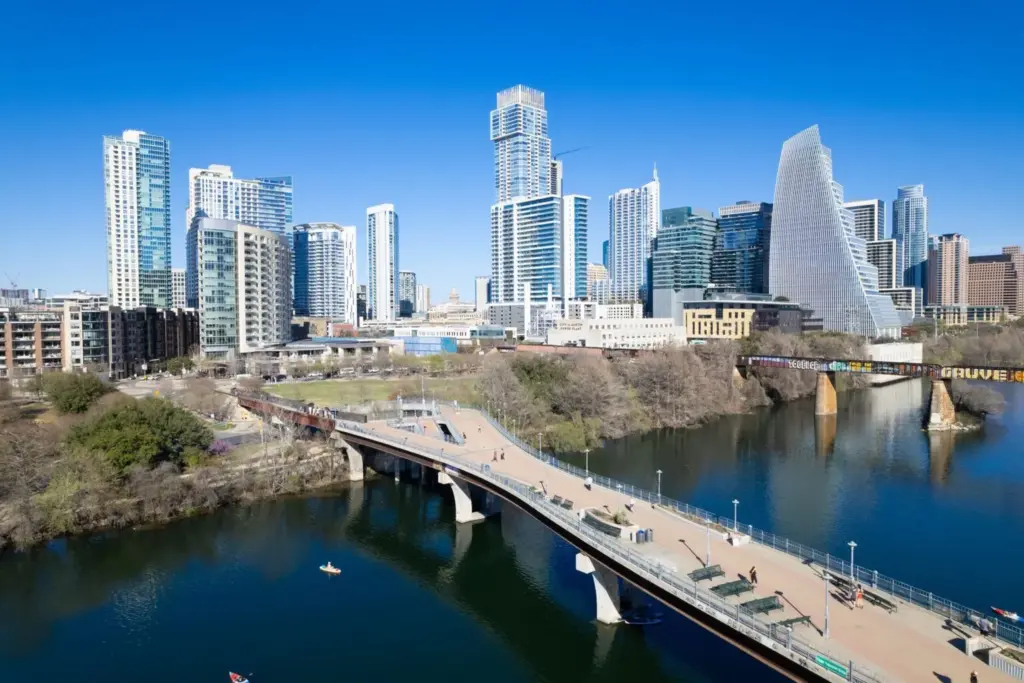
A New Yorker selling a median Manhattan co-op for $825,000 in 2026 can buy a four-bedroom single-story home on a quarter-acre lot in Austin, Texas and still have six figures left over. That single transaction captures the financial gravity pulling thousands of New Yorkers south every year, and it barely scratches the surface of what changes when you trade the five boroughs for the Texas Hill Country.
The Austin metro added roughly 8,300 net new technology jobs in 2026, unemployment sits at 3.8 to 4.2 percent, and the median home price across the metro is $440,000 according to April 2026 Austin Board of Realtors data. According to Expatistan’s cost-of-living index (updated April 2026), living in New York City is 85 percent more expensive than living in Austin. For a household earning $150,000 per year, the combined savings from eliminating New York’s state and city income taxes alone total approximately $14,200 annually according to tax comparison data from The Money Pocket’s 2026 analysis.
None of this means the move is simple. Austin requires a car. Summers are brutal. The social fabric works differently. This guide breaks down every dimension of the NYC-to-Austin transition: the real financial math, the culture shift, the neighborhoods that feel most like home, and the logistics of getting 1,744 miles south with your sanity intact.
The Real Cost Comparison: NYC vs. Austin by the Numbers
The headline “85 percent cheaper” needs context. Some categories deliver massive savings. Others barely budge. And one (property taxes) actually costs more in Texas than in New York for equivalent home values.
| Category | New York City | Austin, TX | Savings |
|---|---|---|---|
| 1BR apartment rent (median) | $3,500 to $4,000/mo | $1,400 to $1,600/mo | 55 to 60% |
| 2BR apartment rent (median) | $4,500 to $5,500/mo | $1,800 to $2,100/mo | 58 to 62% |
| Median home price | $1,100,000 (Manhattan) | $440,000 (metro) | 60% |
| State + city income tax ($150K salary) | ~$14,200/year | $0 | 100% |
| Property tax rate | ~0.88% (NYC avg) | ~1.8% (Travis County) | -105% (higher in TX) |
| Monthly transit pass | $132 (MetroCard) | $41.25 (CapMetro) | 69% |
| Groceries (H-E-B vs. NYC bodega/grocery) | $600 to $800/mo | $400 to $550/mo | 30 to 35% |
| Dinner for two (mid-range restaurant) | $120 to $160 | $70 to $100 | 35 to 40% |
| Childcare (full-time) | $2,500 to $3,500/mo | $1,200 to $2,000/mo | 40 to 50% |
The biggest line item is housing. Austin’s rental market is in a soft cycle in 2026 with vacancy rates at 13.8 percent and over 30,000 new apartment units delivered. Rents have dropped 4 to 7 percent year over year according to CoStar data, giving you extraordinary leverage as a renter. You will pay less for a two-bedroom apartment in Austin’s best neighborhoods than you would for a studio in most of Manhattan.
That said, the transit pass comparison is misleading in isolation. Most Austin residents also carry a car payment ($400 to $700/month), insurance ($150 to $250/month), and gas ($100 to $200/month). Budget $650 to $1,150 per month for transportation in Austin versus the $132 MetroCard plus occasional rideshares in NYC.
For a deeper breakdown of housing, utilities, groceries, and more, see the Complete Guide to Cost of Living in Austin.
How Much House Does Your NYC Equity Buy in Austin?
This is the question that drives most NYC-to-Austin moves. The purchasing power translation is dramatic.
| NYC Property Type | Typical Sale Price | Net After Fees | What It Buys in Austin |
|---|---|---|---|
| Manhattan studio co-op | $475,000 | ~$400,000 | 3BR/2BA updated home in Round Rock or Cedar Park |
| Manhattan 1BR co-op | $650,000 | ~$555,000 | 4BR/3BA home in Bee Cave, Pflugerville, or Kyle |
| Manhattan 1BR condo | $950,000 | ~$840,000 | 4BR/3BA in Lakeway or Dripping Springs on 0.25+ acres |
| Manhattan 2BR co-op | $1,200,000 | ~$1,035,000 | 5BR/4BA custom home in Bee Cave or Spicewood with Hill Country views |
| Manhattan 2BR condo | $1,750,000 | ~$1,575,000 | Luxury 5BR in Westlake, Spanish Oaks, or lakefront on Lake Travis |
| Brooklyn 2BR condo | $900,000 | ~$800,000 | 4BR/3BA in Mueller, Bouldin Creek, or South Austin |
The “net after fees” column accounts for NYC seller closing costs: broker commission (5 to 6 percent), co-op flip tax (1 to 3 percent where applicable), NYC/NY State transfer taxes (1.4 to 1.825 percent on sales above $500,000), attorney fees ($1,500 to $5,000), and miscellaneous building fees. Co-op sellers lose approximately 8 to 12 percent of the sale price to transaction costs. Condo sellers lose 7 to 10 percent.
In Austin, buyer closing costs run 2 to 5 percent, meaning your NYC equity stretches far. A household that owned a $1.2 million co-op in the Upper West Side could purchase a $700,000 home in Bee Cave outright with cash, invest the remaining $300,000+, and carry zero mortgage payment. That scenario is surprisingly common among NYC transplants.
The Tax Math: What You Actually Save Moving to Texas
Texas has no state income tax. New York State’s top rate is 10.9 percent, and New York City residents pay an additional 3.078 to 3.876 percent. The combined hit for a NYC resident at higher incomes approaches 14.7 percent before federal taxes.
| Household Income | NYC State + City Tax | Texas State Tax | Annual Savings | 10-Year Savings |
|---|---|---|---|---|
| $100,000 | ~$9,500 | $0 | $9,500 | $95,000 |
| $150,000 | ~$14,200 | $0 | $14,200 | $142,000 |
| $250,000 | ~$27,500 | $0 | $27,500 | $275,000 |
| $500,000 | ~$56,000 | $0 | $56,000 | $560,000 |
But the math has an important offset. Texas property taxes are roughly double New York City’s effective rate. On a $500,000 Austin home, expect to pay $9,000 to $10,000 per year in property taxes. On a $750,000 home, that jumps to $13,500 to $15,000. File your Texas homestead exemption immediately after closing to reduce your tax bill.
Even after the property tax offset, most households earning above $100,000 come out significantly ahead in Texas. A dual-income household earning $250,000 saves roughly $27,500 in income tax, pays perhaps $5,000 more in property taxes than they would in NYC on a comparable home, and nets $22,500+ annually. Over a decade, that is $225,000 in real savings.
For the full breakdown of how Texas property taxes work, including exemptions, MUD/PID districts, and the protest process, see the Complete Guide to Property Taxes in Austin.
Remote Work Tax Trap
If you work remotely for a New York-based employer, New York may still tax your income under the “convenience of the employer” rule. New York can claim you owe state taxes if your remote arrangement is for your own convenience rather than a business necessity of your employer. To fully capture the tax savings, your employer either needs a Texas office or must document that your remote work is required, not optional. Consult a CPA familiar with both states before assuming you are in the clear.
Selling Your NYC Co-op or Condo Before the Move
The logistics of selling in New York are different from anywhere else in the country. Plan for a longer timeline than you expect.
Co-op sales take 3 to 6 months from accepted offer to closing. The buyer must submit a board package (financial statements, reference letters, employment verification) and pass a board interview. Boards can reject buyers without explanation. A new NYC law taking effect July 28, 2026 establishes deadlines for co-op boards to approve or deny applications, which should improve predictability going forward.
Condo sales close in 6 to 10 weeks, much closer to a standard real estate transaction. No board approval is required (just a right of first refusal, which buildings rarely exercise).
Co-op flip tax: Most co-op buildings charge the seller a flip tax of 1 to 3 percent of the sale price. On a $1,000,000 sale, that is $10,000 to $30,000 on top of your other closing costs.
Mortgage recording tax: One advantage of co-ops is that buyers do not pay New York’s mortgage recording tax (1.8 to 1.925 percent), which can make your co-op more attractive to financed buyers.
Start the process at least 6 months before your target move date. NYC real estate typically needs 2 to 4 weeks for staging and photography, 30 to 90 days on market, and then the contract-to-close period.
Austin’s Job Market for NYC Transplants in 2026
Austin’s tech sector employed 180,500 workers in 2026, representing 13.7 percent of the total workforce according to the Austin Chamber of Commerce. The metro added approximately 8,300 net new technology jobs in 2026, concentrated in AI infrastructure, semiconductor-adjacent software, and enterprise SaaS.
Major NYC-to-Austin employer pipeline:
- Apple (North Austin campus, ~15,000 employees): The company’s largest campus outside Cupertino. Heavy presence in operations, engineering, and AI/ML.
- Tesla (Gigafactory Texas, 22,000+ manufacturing plus 3,500+ engineers): Headquartered in Austin since 2021.
- Oracle (HQ campus, 564 open positions): Relocated global headquarters from Redwood City.
- Dell Technologies (Round Rock HQ): Long-time Austin anchor employer in enterprise IT.
- Google, Meta, Amazon, IBM, AMD: All have significant Austin offices, particularly in cloud, semiconductor, and AI work.
- Deloitte, Indeed, Visa, Samsung: Major non-tech employers with Austin hubs.
The $4.5 billion in VC funding flowing through Austin in 2024 created a startup ecosystem that New Yorkers in fintech, SaaS, and creative industries will recognize. Austin is not Silicon Valley’s little sibling anymore. It is a distinct tech hub with its own identity, and the NYC-to-Austin talent pipeline runs strong in finance, media technology, and enterprise sales.
For people in media, advertising, government, or finance (industries that dominate NYC), the transition requires more planning. Austin’s media industry is growing but small. State government offers stable employment. Financial services has a presence through Visa, Charles Schwab (DFW, but remote roles), and local wealth management firms, but nothing approaching Wall Street’s scale.
For a comprehensive view of Austin’s employment landscape, see the Complete Guide to Moving to Austin.
Austin Neighborhoods That Feel Like Home for New Yorkers
Every NYC transplant asks the same question: “Where should I live?” The answer depends on which version of New York you are trying to replicate, or whether you are ready to embrace something entirely new.
If You Loved Manhattan (walkability, density, nightlife)
Downtown Austin is the closest analog. Walk Score of 99. High-rise condos, restaurants at street level, live music within walking distance. One-bedroom condos range from $300,000 to $600,000. Two-bedrooms from $450,000 to $1,200,000. The Domain (North Austin) offers a similar mixed-use environment with lower prices.
Best for: Singles, young professionals, people who want to minimize car dependence.
If You Loved Brooklyn (creative, eclectic, food scene)
East Austin is your neighborhood. Walk Score of 84. Former warehouse district turned creative hub with craft cocktail bars, taco trucks, art galleries, and live music venues. Median home prices range from $500,000 to $750,000 for a renovated bungalow. This is where the energy lives.
South Congress (SoCo) and Bouldin Creek offer a similar creative vibe with more of a neighborhood feel. Median home prices run $600,000 to $900,000+.
If You Loved the Upper West Side or Park Slope (established, green, good schools)
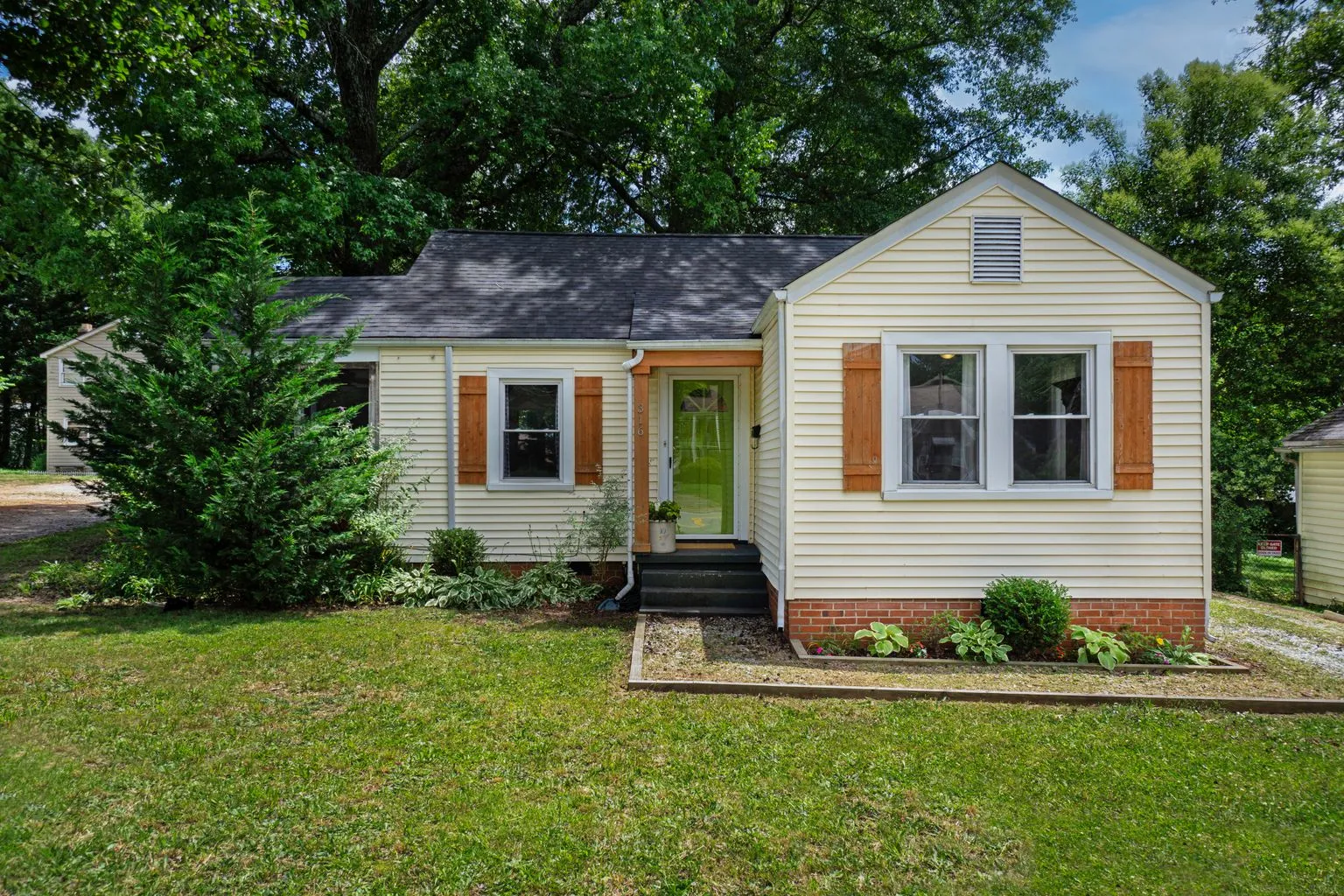
Tarrytown and Zilker deliver tree-lined streets, proximity to parks (Zilker Park is Austin’s Central Park), excellent schools in the Eanes ISD boundary, and a family-oriented community. Homes range from $800,000 to $2,000,000+. Mueller (northeast) is a master-planned community with a New Urbanist design: walkable streets, mixed-use retail, parks. More affordable at $450,000 to $750,000.
If You Loved the Suburbs (Westchester, Long Island, New Jersey)
Bee Cave, Lakeway, and Dripping Springs are the Hill Country suburbs that most NYC suburban transplants gravitate toward. Excellent Lake Travis ISD and Dripping Springs ISD schools, larger lots (0.25 to 2+ acres), master-planned communities, and median prices from $550,000 to $750,000. The commute to downtown is 25 to 45 minutes depending on traffic, which feels familiar to anyone who commuted from Westchester or northern New Jersey.
Cedar Park and Round Rock offer the best value at $375,000 to $500,000, strong Leander ISD and Round Rock ISD schools, and a more suburban, family-oriented environment.
For a detailed breakdown of every Austin neighborhood by lifestyle, see the Complete Guide to Austin Neighborhoods by Lifestyle.
The Car Question: Life Without the Subway
This is the biggest adjustment for New Yorkers. Austin’s overall Walk Score is 42, which means car-dependent. Even the most walkable neighborhoods require a car for grocery runs, medical appointments, and anything outside your immediate radius.
What to expect:
- CapMetro runs 55 bus lines and one MetroRail commuter line. It does not function like the MTA. Routes are infrequent, coverage is limited, and the system does not run 24/7.
- Project Connect (Austin’s light rail project) broke ground and is scheduled for service in 2033. It will eventually connect downtown to the airport, UT campus, and North Austin. But it is years away.
- Rideshare (Uber, Lyft) works well in central Austin. Costs are lower than NYC. Many transplants go car-free for the first 3 to 6 months using rideshare before buying a vehicle.
- Rush-hour traffic on I-35, MoPac (Loop 1), and Highway 183 is real. Budget 30 to 50 minutes for a commute that would take 15 minutes outside peak hours.
Budget for car ownership: $650 to $1,150 per month (payment, insurance, gas, maintenance). If you have never owned a car, factor in $2,000 to $5,000 for initial costs (down payment, plates, inspection, insurance deposit).
One silver lining: free parking is nearly universal in Austin. Street parking, garage parking at restaurants, parking at your apartment complex. The concept of paying $400 to $600 per month for a garage spot (standard in Manhattan) does not exist here.
For a deep dive into Austin’s traffic patterns, toll roads, and commute times by neighborhood, see the Complete Guide to Austin Commutes and Transportation.
Food, Culture, and Entertainment: What Stays, What Changes
New Yorkers worry about this one. “Will I be bored?” The short answer: no. The longer answer: it is different, and different is not worse.
The Food Scene
Austin’s food scene is world-class in specific categories and absent in others. You will find exceptional BBQ (Franklin, la Barbecue, Micklethwait), Tex-Mex (Matt’s El Rancho, Fonda San Miguel), tacos (Veracruz All Natural, Suerte, Nixta Taqueria), and food trucks everywhere.
What you will miss: the depth of international cuisine. NYC has 27,000+ restaurants representing virtually every global cuisine. Austin has excellent Vietnamese (Pho Saigon, Elizabeth Street Cafe), Japanese (Uchi, Uchiko, Kemuri Tatsu-ya), and Ethiopian options. But you will not find the density of Korean, Cantonese, Indian, or Italian restaurants that you took for granted in New York. H-E-B, Texas’s beloved grocery chain, will help fill the gap. New Yorkers are universally shocked by how good H-E-B is. Think of it as Trader Joe’s quality with Whole Foods selection at regular grocery prices.
For the full restaurant and food breakdown, see the Complete Guide to Austin’s Food and Restaurant Scene.
Live Music and Culture
Austin calls itself the “Live Music Capital of the World,” and the claim holds up. On any given night, you can see live music at 250+ venues. The Continental Club, Stubb’s, ACL Live at the Moody Theater, Mohawk, Saxon Pub, and dozens of smaller bars along Red River and Sixth Street offer everything from blues to electronic. SXSW (March) and Austin City Limits Festival (October) are anchor events.
Museums are smaller than NYC’s (this is not the Met or MoMA), but the Blanton Museum of Art, The Contemporary Austin, and the Bullock Texas State History Museum are worth visiting. The theater scene (Zach Theatre, Long Center, Paramount Theatre) punches above its weight.
For more detail, see the Complete Guide to Arts, Music, and Culture in Austin.
Weather and Seasons: Preparing for Texas Heat
New Yorkers underestimate Austin summers. Badly.
June through September brings daily highs of 95 to 105+ degrees. Heat index values can reach 110 to 115 degrees during peak afternoon hours. You cannot comfortably walk outside between 11 a.m. and 7 p.m. for roughly four months of the year. If your entire NYC lifestyle was built around walking to the subway, walking to the park, and walking to dinner, this is the adjustment that catches most transplants off guard.
The upside: October through May in Austin is spectacular. Winters are mild (average highs of 55 to 65 degrees in January), with only a handful of days below freezing. Spring wildflower season (March through May) is genuinely beautiful. Fall is warm and long.
Practical tips from transplants:
- Your wardrobe will change. Wool coats, heavy boots, and layering go into permanent storage. Invest in linen, moisture-wicking fabrics, and good sunglasses.
- Outdoor activities shift to early morning (before 10 a.m.) or evening (after 7 p.m.) from June through September.
- Air conditioning is not optional. Budget $200 to $400+ per month for electricity in summer (Austin Energy rates). Your HVAC system runs 8 to 12 hours per day during peak heat.
- Cedar fever season (December through February) is not a fever at all. It is an allergic reaction to mountain cedar pollen. Many newcomers experience it intensely in their first two years.
For the complete weather breakdown, see the Complete Guide to Austin Weather and Climate.

The Social Adjustment: Building a Network from Scratch
In NYC, your social life happens organically. You share a subway car, you sit next to someone at a bar, you meet people through the sheer density of human contact. Austin does not work that way. Socializing requires more intentional effort, especially if you are over 30.
Where NYC transplants connect:
- Industry meetups: Austin has active groups for tech, creative, finance, and startup communities. Capital Factory hosts regular events. Austin Tech Alliance meets monthly.
- Fitness communities: CrossFit gyms, running clubs (Austin Runners Club, November Project), and cycling groups (Social Cycling Austin) are major social hubs. Barton Springs Pool is a communal gathering place.
- Neighborhood bars and coffee shops: Regular spots matter more in Austin than in NYC. Find a local coffee shop and become a regular. The culture rewards familiarity.
- Volunteer organizations: Austin Pets Alive, Habitat for Humanity, Keep Austin Beautiful. Volunteering is a fast track to community.
- Sports leagues: Austin Sports and Social Club runs kickball, softball, volleyball, and pickleball leagues specifically designed for adults to meet people.
The pace is slower. People are friendly, genuinely friendly, in a way that takes New Yorkers a minute to trust. “Austin nice” is real, but deep friendships take longer to build than you might expect.
Buying a Home in Austin: What NYC Buyers Need to Know
The Texas real estate transaction is faster, simpler, and more buyer-friendly than New York’s process. A few key differences:
No attorneys required. Texas is not an attorney state. Title companies handle closings. You can hire a real estate attorney ($500 to $1,500 for contract review), but it is optional. Coming from NYC where attorneys are mandatory, this feels strange at first.
Option period. Texas has a unique option period (typically 7 to 14 days) where you pay a small fee ($100 to $500) for an unrestricted right to terminate the contract for any reason. This is more flexible than a NYC contract contingency.
Faster closings. A typical Austin transaction closes in 30 to 45 days from executed contract. Compare that to 6 to 10 weeks for a NYC condo and 3 to 6 months for a co-op.
No mansion tax, no flip tax, no mortgage recording tax. Texas has no state transfer tax. The only transfer-related cost is the title insurance premium, which is state-regulated and runs approximately $2,264 on a $400,000 home (reduced 6.2 percent effective March 1, 2026 by TDI order).
Inspection matters more. Austin homes sit on expansive clay soil that can cause foundation issues. HVAC systems work harder than anywhere in the Northeast. A thorough home inspection is critical, especially for transplants unfamiliar with Texas-specific issues.
Ed Neuhaus, broker of Neuhaus Realty Group, notes that NYC buyers often underestimate how much house they can afford in Austin. “We regularly work with buyers selling a one-bedroom co-op in Manhattan who end up in a four-bedroom home on a half-acre in Bee Cave or Lakeway. The purchasing power difference is real, but so is the learning curve on property taxes, HOAs, and MUD districts.”
For the step-by-step homebuying process in Texas, see the Complete Guide to Closing on a Home in Texas.
Moving Logistics: Getting from NYC to Austin
The move itself is 1,744 miles. Here is what to budget:
| Moving Method | Cost Range | Transit Time | Best For |
|---|---|---|---|
| Full-service movers (studio/1BR) | $1,000 to $4,300 | 7 to 15 days | Small apartments, hands-off approach |
| Full-service movers (2BR+) | $2,500 to $10,300 | 7 to 15 days | Larger households, full furniture transport |
| Moving container (PODS, etc.) | $1,300 to $6,500 | 10 to 21 days | Flexible timeline, partial DIY |
| Rental truck (U-Haul, Penske) | $1,200+ | 3 to 4 days driving | Budget-conscious, minimal belongings |
| Ship car separately | $800 to $1,500 | 5 to 10 days | If driving a rental truck |
Pro tips from NYC-to-Austin movers:
- NYC elevator and parking logistics add $200 to $500 to any moving estimate. Book the building freight elevator well in advance and confirm your move-out time window with building management.
- August and September are the cheapest months to move to Austin (lower demand after summer). January and February are also off-peak.
- Many NYC transplants sell most of their furniture and buy new in Austin. NYC apartment-scale furniture looks comically small in a Texas living room. Plus, shipping heavy furniture 1,744 miles often costs more than replacing it.
- Ship winter clothes, but be honest: you will wear your parka once a year, if that.
Your First 30 Days in Austin: The Essential Checklist
Week 1: Administrative
- Get a Texas driver’s license within 30 days (DPS office, bring NYC license, passport, proof of Texas address). New York will cancel your NY license when Texas notifies them.
- Register your vehicle within 30 days (county tax office, bring title, insurance proof, inspection)
- Set up Austin Energy (electric), Texas Gas Service, and water (city or utility district)
- Choose internet: AT&T Fiber, Google Fiber, or Spectrum depending on neighborhood availability
- Forward mail (USPS change of address)
Week 2: Healthcare and Services
- Find a primary care physician. Major systems: Ascension Seton, St. David’s, Baylor Scott & White, Dell Medical at UT. See the Complete Guide to Healthcare in Austin.
- Find a dentist and eye doctor
- Register to vote (Texas voter registration, 30-day requirement before elections)
- Update your address with banks, brokerages, insurance, employer
Week 3: Community
- Explore your neighborhood. Walk (early morning) or drive the surrounding areas.
- Visit H-E-B. Seriously. It will become your favorite store.
- Find your coffee shop, your taco spot, and your happy hour bar
- Sign up for one social activity (gym, sports league, meetup, volunteer group)
Week 4: Home Setup
- File your Texas homestead exemption if you purchased a home
- Schedule HVAC maintenance (your system will be working hard). See the Complete Guide to Home Maintenance in Central Texas.
- Research property tax protest options (Travis County appraisals come in April/May)
- Get pest control on a schedule (quarterly is standard in Central Texas)
Common Mistakes NYC Transplants Make in Austin
1. Underestimating the heat. Every NYC transplant says “I can handle it.” After your first July, you understand why Texans take summer seriously. Budget for electricity and plan your outdoor time accordingly.
2. Trying to live without a car. It works downtown for about three months. Then you need to get to an H-E-B that is not a 45-minute bus ride away, visit a friend in South Austin, or drive to Barton Springs. Buy or lease a car within your first month.
3. Not filing the homestead exemption. New York does not have an equivalent. Texas homestead exemption reduces your property tax bill by $100,000+ in assessed value for school district taxes alone, plus additional exemptions from city and county. Filing is free. Not filing costs you $1,500+ per year. Do it immediately.
4. Ignoring MUD and PID taxes. Some Austin-area neighborhoods carry additional taxes from Municipal Utility Districts (MUDs) or Public Improvement Districts (PIDs). A home that looks affordable at $450,000 may carry an extra $3,000 to $5,000 per year in MUD taxes on top of standard property taxes. Always ask.
5. Assuming Austin culture = NYC culture, just cheaper. Austin has its own identity. The tech scene overlaps, but the creative economy, the music culture, the outdoor lifestyle, and the pace of life are distinct. Transplants who thrive are the ones who lean into what Austin does well rather than comparing everything to what they left behind.
6. Buying in the wrong neighborhood. A New Yorker who loved the West Village will be miserable in a cookie-cutter subdivision 30 miles from downtown, no matter how big the house is. Neuhaus Realty Group works with NYC transplants regularly and can match your lifestyle preferences to the right Austin neighborhood before you waste time touring homes that are not a fit.
7. Not planning for cedar fever. Mountain cedar pollen season (December through February) hits newcomers hard. Stock up on antihistamines, consider starting allergy shots before you move, and do not assume you are immune because you “never had allergies in New York.”
Remote Work from Austin: What NYC Professionals Should Know
A significant percentage of NYC-to-Austin moves are driven by remote work flexibility. Austin consistently ranks among the top cities for remote workers, with strong internet infrastructure (Google Fiber and AT&T Fiber coverage is extensive), a growing co-working scene, and a lifestyle that complements working from home.
Key considerations:
- Internet speeds: Google Fiber offers symmetric 1 Gbps for $70/month in covered areas. AT&T Fiber offers up to 5 Gbps. Spectrum provides cable. Coverage varies by neighborhood. Check before you buy.
- Co-working spaces: Capital Factory (downtown), WeWork (multiple locations), Industrious, and dozens of independent spaces provide professional work environments. Monthly memberships run $200 to $600 for a dedicated desk.
- Tax nexus: Confirm with your CPA that your employer properly recognizes your Texas domicile. New York’s “convenience of the employer” rule can claw back income tax if your remote work is deemed voluntary rather than employer-required.
For a complete guide to internet, neighborhoods, and home office considerations, see the Complete Guide to Working from Home in Austin.
Frequently Asked Questions
Making the Move: Next Steps
Moving from New York to Austin is one of the most common and most rewarding relocations in the country. The financial math works at virtually every income level. The quality of life improvements (space, nature, pace) are immediate and tangible. The tradeoffs (heat, car dependency, smaller cultural institutions) are real but manageable.
Start here:
- Run the tax math. Calculate your specific income tax savings using your actual NYC tax returns. Factor in Austin property taxes at 1.8 percent of your target home price.
- Research neighborhoods. Use the Austin Neighborhoods by Lifestyle guide to narrow your search based on what you value most.
- Talk to a local agent. A broker who works with NYC transplants understands the co-op-to-SFH mindset shift, the neighborhood analogies, and the Texas-specific transaction differences. Reach out to Neuhaus Realty Group for a free consultation.
- Visit in summer. Seriously. Do not visit Austin in March (SXSW weather is perfection) and assume that is the year-round experience. Visit in July or August to make an honest assessment.
- List your NYC property. Give yourself a 6-month runway for co-op sales, 3 months for condos. Coordinate closing dates to minimize double-carrying costs.
Austin welcomed over 150 new residents per day at its pandemic peak. The pace has slowed, but the pipeline is steady, and New Yorkers remain one of the largest feeder markets. The city has the infrastructure, the jobs, and the culture to absorb transplants well. The question is not whether Austin can work for you. It is whether you are ready to leave the subway behind.