Texas has more veterans than any other state in the country. According to the U.S. Department of Veterans Affairs, approximately 1.4 million veterans call Texas home in 2026, and a significant share of them live in the Austin metro area. With Camp Mabry sitting on 800 acres in central Austin and Fort Cavazos (formerly Fort Hood) just 60 miles north, the region offers active-duty service members, Guard and Reserve personnel, and veterans a rare combination of military infrastructure, VA healthcare access, and one of the strongest job markets in the Sun Belt.
Austin’s appeal for military-connected residents goes beyond proximity to installations. The city’s booming tech sector, lack of a state income tax, generous property tax exemptions for disabled veterans, and access to the largest freestanding VA outpatient clinic in the United States make it one of the top destinations for military transitions and retirements. According to the Texas Veterans Commission, the state’s veteran support infrastructure includes more than 200 organizations dedicated to housing, employment, healthcare, and education.
This guide covers everything military service members and veterans need to know about living in Austin: from BAH rates and VA home loan strategies to the Hazlewood Act, PCS logistics, veteran property tax exemptions, and the best neighborhoods by installation proximity. Whether you are PCSing to Camp Mabry, commuting to Fort Cavazos, transitioning out of the military, or retiring in the Hill Country, this is your complete resource.
Why Military and Veterans Choose Austin
Austin consistently ranks among the best cities for veterans and military retirees. Several factors drive that ranking.
No state income tax. Texas is one of nine states with no personal income tax. Military retirement pay, VA disability compensation, and civilian income are all untaxed at the state level. For a retired O-5 collecting $4,500 per month in retirement pay, that is roughly $2,700 per year in savings compared to a state like Virginia or North Carolina with a 5% income tax rate.
Strong job market. Austin’s tech corridor includes Apple, Tesla, Google, Meta, Oracle, Samsung, Dell, and Indeed. The city saw 22% growth in veteran-targeted positions compared to the prior year, according to Military.com employment data. Defense contractors Lockheed Martin, BAE Systems, and L3Harris all have Austin-area operations.
Two military installations. Camp Mabry provides National Guard, Reserve, and state military employment in the heart of the city. Fort Cavazos, the largest active-duty armored post in the Western Hemisphere, sits an hour north on I-35 and supports thousands of personnel who choose to live in the Austin metro.
Veteran-friendly homebuying. With a VA loan conforming limit of $832,750 across all 254 Texas counties (standard-limit state), full-entitlement veterans can purchase a home at any price the lender approves with zero down payment. Texas also offers the Veterans Land Board (VLB) loan program with below-market rates.
Quality of life. Austin offers 512 parks across 20,000+ acres, 200 miles of hiking and biking trails, live music venues, a thriving food scene, and access to the Texas Hill Country. Lake Travis sits 20 minutes west. For outdoor-oriented veterans, few metro areas offer this combination of recreation and affordability.
Military Installations Near Austin
Camp Mabry
Camp Mabry occupies more than 800 acres in central Austin, just west of MoPac Boulevard (Loop 1) near the intersection of 35th Street. It serves as the headquarters of the Texas Military Department and is home to the Texas Army National Guard, the Texas Air National Guard, and the Texas State Guard.
The installation also hosts Reserve components from multiple branches: U.S. Army Reserve, Navy Operations Support Center (NOSC Austin), and U.S. Marine Corps Reserve units. Other on-post facilities include the 136th Regional Training Institute, combined support maintenance shops, the 36th Infantry Division headquarters armory, a medical clinic, and the Texas Military Forces Museum.
In April 2026, Camp Mabry made national news when the Texas Military Department executed a Black Start Exercise simulating complete electrical grid failure. The Texas National Guard became the first in the entire Department of Defense portfolio to operate on microgrids alone, testing the installation’s energy resilience in a scenario modeled after the 2021 Winter Storm Uri experience.
Camp Mabry is not a traditional “base” with on-post housing or commissary/exchange facilities. Personnel stationed here live in the surrounding Austin neighborhoods and commute to the installation. This makes neighborhood selection and BAH planning particularly important.
Fort Cavazos (Formerly Fort Hood)
Fort Cavazos sits approximately 60 miles north of Austin in Bell and Coryell Counties, spanning 335 square miles. Officially renamed on May 9, 2023, after General Richard E. Cavazos, the U.S. Army’s first Hispanic four-star general, the installation is the largest active-duty armored post in the free world.
The commute from north Austin or Georgetown to Fort Cavazos takes roughly 55 to 75 minutes via I-35, depending on traffic and the specific gate used. Thousands of military personnel choose to live in the Austin metro rather than in Killeen or Temple, particularly those whose spouses work in Austin’s tech sector or who prefer Austin’s amenities and school districts.
Popular Austin-area communities for Fort Cavazos commuters include Georgetown (closest at roughly 45 minutes), Round Rock (50 to 55 minutes), and Cedar Park (55 to 65 minutes). Georgetown in particular has become a magnet for military households, with its Sun City 55+ community appealing to Army retirees and its median home price around $380,000 providing strong value relative to BAH.
2026 BAH Rates for Austin and What They Buy
Basic Allowance for Housing (BAH) rates for Austin decreased an average of 6.19% for service members with dependents in 2026, reflecting softening in the Austin rental and housing markets. Service members already stationed in Austin are protected from decreases through rate protection as long as their status has not changed.
The following table shows 2026 BAH rates for Austin, TX (Military Housing Area), published by the Department of Defense effective January 1, 2026:
| Pay Grade | With Dependents | Without Dependents |
|---|---|---|
| E-1 to E-4 | $2,046/mo | $1,536/mo |
| E-5 | $2,241/mo | $1,731/mo |
| E-6 | $2,802/mo | $2,103/mo |
| E-7 | $3,039/mo | $2,280/mo |
| E-8 | $3,294/mo | $2,472/mo |
| E-9 | $3,558/mo | $2,670/mo |
| O-1 | $2,313/mo | $1,848/mo |
| O-2 | $2,796/mo | $2,283/mo |
| O-3 | $3,447/mo | $2,676/mo |
| O-4 | $3,825/mo | $3,054/mo |
| O-5 | $4,095/mo | $3,198/mo |
What BAH buys in Austin. An E-5 with dependents at $2,241 per month ($26,892 per year) can afford a home in the $280,000 to $330,000 range with a VA loan (zero down, no PMI), depending on other debts and credit score. That price point opens up options in Pflugerville, Manor, and parts of east Round Rock.
An O-3 with dependents at $3,447 per month translates to roughly $41,364 per year in housing allowance, supporting a purchase in the $420,000 to $500,000 range. That puts Cedar Park, most of Round Rock, and parts of Dripping Springs within reach. An O-5 at $4,095 per month can target the $500,000 to $600,000 range, opening up Bee Cave, Lakeway, and premium Round Rock neighborhoods.
VA Home Loan Benefits in Texas
The VA home loan remains the single most powerful homebuying tool available to eligible service members, veterans, and surviving spouses. In Texas, where the 2026 conforming loan limit sits at $832,750 across all 254 counties (standard-limit state), the VA loan advantage is particularly strong.
Zero down payment. Veterans with full entitlement have no loan limit cap. You can purchase a $500,000 or $800,000 home with zero down, provided you qualify on income and credit. The VA guarantees a portion of the loan, eliminating the lender’s need for a down payment.
No private mortgage insurance (PMI). Conventional loans with less than 20% down require PMI, which runs $100 to $300+ per month on a typical Austin purchase. VA loans never require PMI, saving thousands over the life of the loan.
Funding fee structure. First-time VA loan users pay a 2.15% funding fee with no down payment. Subsequent users pay 3.3%. Putting 5% or more down reduces the fee to 1.5%. On a $450,000 purchase, the first-use funding fee totals $9,675, and it can be rolled into the loan balance.
Funding fee exemption. Veterans with any level of VA disability compensation (even 10%) are completely exempt from the funding fee. On a $450,000 purchase, that is $9,675 in immediate savings. Purple Heart recipients and surviving spouses are also exempt.
Seller concessions. VA rules allow sellers to contribute up to 4% of the sale price toward buyer closing costs. In Austin’s current buyer-friendly market, most sellers are willing to negotiate concessions.
For a detailed breakdown of VA loan mechanics, eligibility, and Austin-specific lender recommendations, see our Complete Guide to Buying a Home with VA Benefits in Austin.
Texas Veterans Land Board (VLB) Loans
Texas offers a state-level loan program through the Veterans Land Board that is separate from and can complement the federal VA home loan. Administered by the Texas General Land Office, the VLB provides below-market-rate financing for eligible Texas veterans and military members.
Home loan program. The VLB home loan offers a fixed rate of 6.35% as of early 2026, with a disability discount rate of 5.85% for veterans with a 30% or higher VA service-connected disability rating. The maximum loan amount is $832,750. The home must serve as your Texas primary residence, you must occupy it within 60 days of closing, and it must remain your primary residence for at least three years.
Land loan program. For veterans interested in purchasing acreage in the Hill Country or rural Central Texas, the VLB land loan offers a 7.25% fixed rate on a 30-year term. This program is particularly useful for raw land purchases, which are notoriously difficult to finance through conventional channels. For more on land purchases, see our Complete Guide to Buying Land in the Texas Hill Country.
Important 2026 update. Effective April 30, 2026, the VLB placed a temporary moratorium on accepting new Home Improvement Loan applications while evaluating program rules and future direction. The home loan and land loan programs remain active. Contact the VLB hotline at 1-800-252-8387 for current program status.
VLB loans can be combined with other benefits. A veteran could use a VA loan for the primary purchase and a VLB land loan for a separate acreage purchase, for example. The programs serve different financing needs.
Veteran Property Tax Exemptions in Texas
Texas offers some of the most generous property tax exemptions for disabled veterans of any state. Given that Texas relies heavily on property taxes (no state income tax means higher property tax rates, typically 1.8% to 2.5% in the Austin area), these exemptions can represent tens of thousands of dollars in annual savings (Texas Comptroller).
| VA Disability Rating | Exemption Amount | Annual Savings (est. on $450K home at 2.1% rate) |
|---|---|---|
| 10% to 29% | $5,000 | ~$105 |
| 30% to 49% | $7,500 | ~$158 |
| 50% to 69% | $10,000 | ~$210 |
| 70% to 99% | $12,000 | ~$252 |
| 100% (or Individual Unemployability) | Total exemption (no cap) | ~$9,450 |
The 100% exemption under Texas Tax Code Section 11.131 is the headline benefit. A veteran with a 100% disability rating or a determination of individual unemployability pays zero property taxes on their residence homestead, regardless of the home’s value. There is no income test and no cap on the home’s appraised value. On a $450,000 home with a 2.1% effective tax rate, that exemption saves approximately $9,450 every year.
Surviving spouses. An un-remarried surviving spouse of a 100% permanently and totally disabled veteran retains the full exemption on the same homestead for life. If the surviving spouse moves, they can transfer the dollar amount of the exemption (not the percentage) to a new homestead.
How to apply. File Form 50-114 (Residence Homestead Exemption Application) with your county appraisal district (TCAD in Travis County, WCAD in Williamson). You will need your VA rating letter and proof of homestead occupancy. The filing deadline is April 30, though retroactive filings for up to five years of missed exemptions may be available.
Ed Neuhaus, broker of Neuhaus Realty Group, notes that the 100% veteran exemption is one of the most impactful financial advantages in Texas real estate. “For a veteran buying a $600,000 home in Bee Cave, that exemption can save over $13,000 per year. Over 10 years, that is $130,000 in property taxes you never pay. It fundamentally changes the math on what you can afford.”
For a complete breakdown of all Texas property tax exemptions and the protest process, see our Complete Guide to Property Taxes in Austin and Complete Guide to Homestead Exemption in Texas.
VA Healthcare in Austin
Austin is home to the largest freestanding VA outpatient clinic in the United States. Located at 7901 Metropolis Drive (78744), the Austin VA Clinic occupies 275,000 square feet on a 35-acre site in southeast Austin near the intersection of I-35 and William Cannon Drive.
The clinic provides comprehensive outpatient services including:
- Primary care and urgent care
- Specialty care: cardiology, nephrology, neurology, oncology, endoscopy, urology, ENT, dental, ophthalmology, audiology
- Behavioral health: mental health counseling, PTSD treatment, substance use programs
- Diagnostic imaging and laboratory services
- Pharmacy (on-site)
- Women’s clinic (self-contained unit)
- Minor surgery
The clinic operates Monday through Friday, 8:00 AM to 4:30 PM. For inpatient services, veterans are referred to the Olin E. Teague Veterans’ Center in Temple (approximately 65 miles north, affiliated with the VA Central Texas Health Care System) or to community care providers through the VA MISSION Act.
Austin Vet Center. Separate from the VA Clinic, the Austin Vet Center provides readjustment counseling for combat veterans, military sexual trauma survivors, and bereaved military household members. The Vet Center operates on a walk-in and appointment basis with licensed counselors experienced in military-specific trauma. For a broader look at Austin hospital systems, insurance options, mental health resources, and healthcare costs beyond the VA system, see the Complete Guide to Healthcare in Austin.
Community care. Under the VA MISSION Act, veterans who face long wait times or travel burdens can access approved community providers. Austin’s robust healthcare ecosystem, including Ascension Seton, St. David’s HealthCare, and Baylor Scott & White, all participate in VA community care networks.
Best Neighborhoods for Military and Veterans
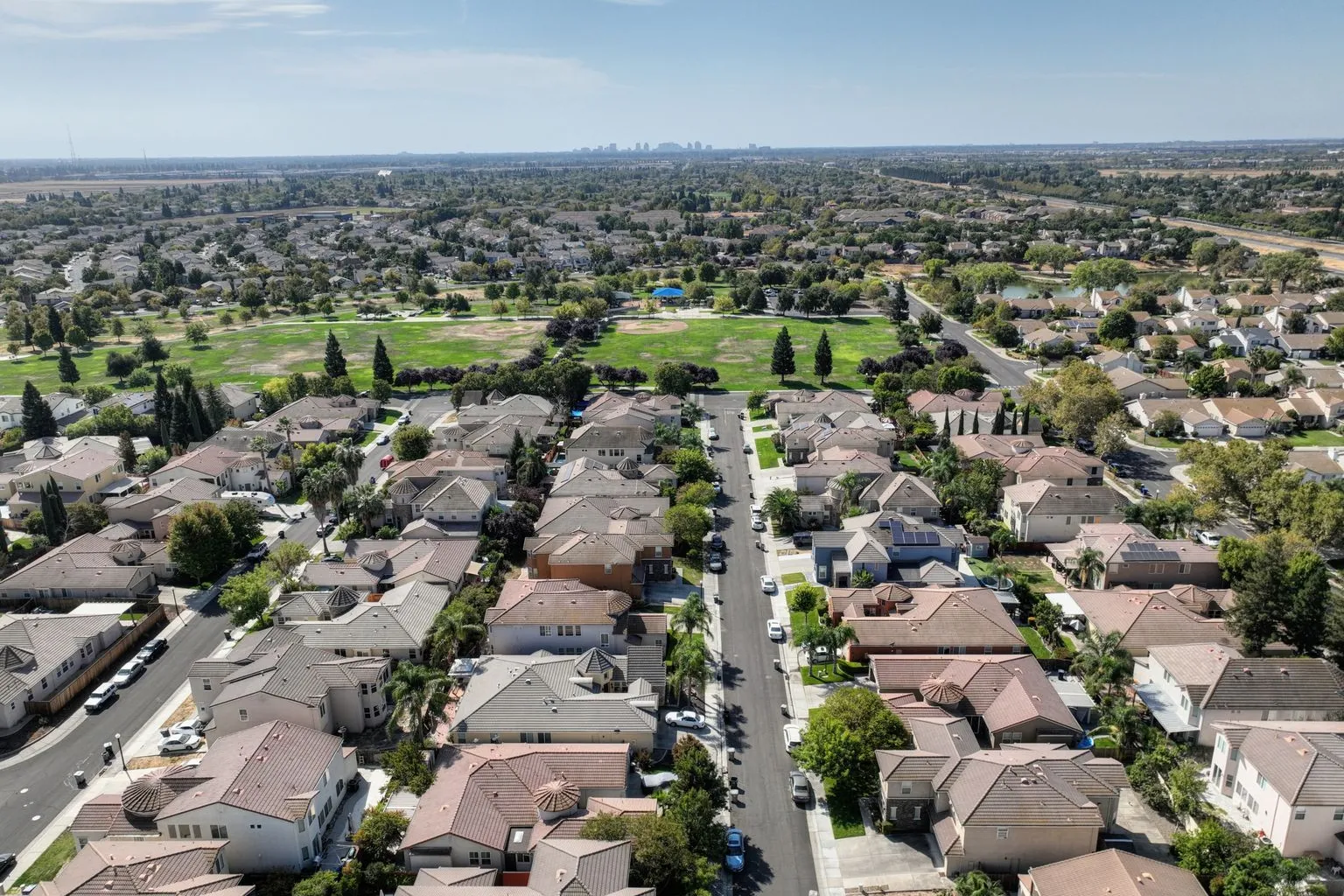
Neighborhood selection depends on your duty station, budget, commute tolerance, and whether you are active duty or retired. The following breakdown organizes options by installation proximity and price point.
Near Camp Mabry (Central/West Austin)
Camp Mabry sits in central-west Austin near Tarrytown, Rosedale, and Brentwood. These neighborhoods are desirable but expensive, with median prices from $750,000 to well over $1 million. For military personnel on BAH, more affordable options within a 15- to 25-minute commute include:
- Cedar Park ($425,000 median): Strong schools in Leander ISD, family-oriented neighborhoods, 20 to 25 minutes north of Camp Mabry via MoPac or 183.
- Round Rock ($400,000 median): Round Rock ISD is highly rated. The Dell/Apple tech corridor provides spouse employment. 25 to 30 minutes north.
- Pflugerville ($375,000 median): The most affordable option close to central Austin. Pflugerville ISD schools, growing retail and dining. 20 to 25 minutes northeast.
Near Fort Cavazos (North Austin/Williamson County)
For service members commuting to Fort Cavazos who prefer Austin metro living over Killeen/Temple:
- Georgetown ($380,000 median): Closest Austin-area city to Fort Cavazos at roughly 45 minutes. Georgetown ISD is top-rated. Sun City offers 55+ living for retirees. Charming downtown square.
- Round Rock ($400,000 median): 50 to 55 minutes to Fort Cavazos. Stronger retail, dining, and entertainment than Georgetown. Direct I-35 access.
- Hutto/Taylor ($320,000 to $350,000 median): Emerging communities east of Georgetown. Samsung’s Taylor manufacturing campus has boosted the local economy. 40 to 50 minutes to Fort Cavazos with lighter traffic than I-35.
For Veterans and Retirees (Lifestyle Priority)
- Dripping Springs ($550,000 median): Hill Country lifestyle with acreage options. Dripping Springs ISD. Wine country. 30 minutes southwest of Austin.
- Bee Cave ($650,000 median): Lake Travis ISD (top-rated). Hill Country Galleria shopping. Close to Lake Travis recreation.
- Lakeway ($725,000 median): Lake living with boat access. Golf communities. Resort feel. Ideal for military retirees seeking an active lifestyle.
| Neighborhood | Median Price | To Camp Mabry | To Fort Cavazos | School District | Best For |
|---|---|---|---|---|---|
| Georgetown | ~$380K | 40 min | 45 min | Georgetown ISD | Fort Cavazos commuters, retirees |
| Round Rock | ~$400K | 25 min | 55 min | Round Rock ISD | Spouse employment, schools |
| Cedar Park | ~$425K | 22 min | 60 min | Leander ISD | Camp Mabry commuters |
| Pflugerville | ~$375K | 22 min | 65 min | Pflugerville ISD | Budget-conscious buyers |
| Dripping Springs | ~$550K | 30 min | 80 min | Dripping Springs ISD | Hill Country lifestyle, acreage |
| Bee Cave | ~$650K | 20 min | 75 min | Lake Travis ISD | Top-rated schools, lake access |
| Lakeway | ~$725K | 25 min | 80 min | Lake Travis ISD | Retirees, lake and golf |
According to Ed Neuhaus, broker of Neuhaus Realty Group, the sweet spot for most military buyers in Austin is the $375,000 to $450,000 range. “That gets you a three- or four-bedroom home in Cedar Park, Round Rock, or Pflugerville with strong schools and a reasonable commute to either Camp Mabry or Fort Cavazos. The BAH covers most or all of the mortgage payment with a VA loan.”
For a comprehensive neighborhood comparison with commute data and school ratings, see our Complete Guide to Austin Neighborhoods by Lifestyle.
PCS Moving to Austin: Your Timeline and Checklist
A Permanent Change of Station (PCS) move to Austin requires planning that starts months before your report date. The following timeline works backward from your move date.
8 to 12 Weeks Out
- Receive and review PCS orders. Verify your report date.
- Meet with your installation finance office to understand entitlements: Dislocation Allowance (DLA), Per Diem, and Temporary Lodging Expense (TLE).
- Research Austin neighborhoods by commute to your duty station, school districts, and price point.
- Get pre-approved for a VA loan. The process can begin before you have a Texas address. Contact multiple lenders for rate comparison (FICO score allows a 14- to 45-day shopping window without multiple credit hits).
- If you have a home to sell at your current duty station, list it or explore a sale-leaseback arrangement.
6 to 8 Weeks Out
- Schedule your household goods (HHG) move through your Transportation Office. Book early for peak PCS season (May through August).
- Start a virtual home search. Many Austin listings offer 3D Matterport tours and video walkthroughs.
- Connect with an Austin-based agent who works with military buyers. A good agent will video-tour homes for you, understand VA appraisal requirements, and coordinate timelines around your report date.
- If needed, arrange temporary housing in Austin. Extended-stay hotels and furnished rentals near your duty station can bridge the gap.
2 to 4 Weeks Out
- Complete your move-out inspection at your current installation.
- Ensure your vehicle registration and insurance are up to date. Texas requires a vehicle inspection within 90 days and registration within 30 days of establishing residency.
- Forward mail through USPS. Set up a PO Box if your Austin address is not yet confirmed.
- Transfer or obtain Texas driver’s license within 30 days of establishing residency (bring DD-214 or military ID for veteran designation).
First 30 Days in Austin
- File for your Texas homestead exemption immediately after closing on a home. Include the disabled veteran exemption if applicable (Form 50-114).
- Register your vehicle with the Travis, Williamson, or Hays County Tax Assessor-Collector’s office.
- Set up utilities: Austin Energy (electricity), City of Austin Water, internet (AT&T Fiber, Google Fiber, or Spectrum depending on area).
- Enroll dependents in school. Contact the school district registrar with your lease or purchase contract, immunization records, and previous school transcripts.
- Register with the Austin VA Clinic (7901 Metropolis Dr) if transferring VA healthcare.
- Register to vote in Texas.
Military Spouse Employment in Austin
Austin’s economy is one of the strongest in the country for military spouse employment. The metro area saw 22% growth in veteran-targeted positions compared to the prior year, and many of those employers actively recruit military spouses as well.
Top employers for military spouses: Apple, Dell, Indeed, Amazon, USAA (San Antonio, but remote roles available), H-E-B corporate, Ascension Seton, the State of Texas, and the University of Texas at Austin all have military spouse hiring programs or veteran affinity groups.
Texas professional license portability. Texas has enacted licensure reciprocity for military spouses in multiple professions, including nursing, teaching, cosmetology, and real estate. A military spouse holding a valid license in another state can typically obtain a Texas license through an expedited review. The Texas Health and Human Services Commission maintains a dedicated military spouse careers portal.
Key resources:
- Military Spouse Employment Partnership (MSEP): A DoD program connecting spouses with partner employers who commit to recruiting, hiring, and retaining military spouses.
- My Career Advancement Account (MyCAA): Provides up to $4,000 in tuition assistance for eligible spouses pursuing certifications or associate degrees in portable career fields.
- Hiring Our Heroes: U.S. Chamber of Commerce Foundation program offering fellowship placements, career networking, and the Career Spark resume builder.
- Texas Workforce Commission: Offers priority employment services for veterans and eligible spouses at local Workforce Solutions offices.
The remote work economy has been a significant equalizer for military spouses. Austin’s robust internet infrastructure (AT&T Fiber and Google Fiber cover much of the metro) and co-working spaces make it one of the top remote-work cities in the country. For more, see our Complete Guide to Working from Home in Austin.
Education Benefits: The Hazlewood Act and GI Bill in Austin
Texas veterans have access to one of the most generous state education benefits in the country through the Hazlewood Act, which stacks on top of federal GI Bill benefits.
The Hazlewood Act
Dating back to 1943, the Hazlewood Act provides qualified veterans with up to 150 credit hours of tuition exemption at any Texas public college or university. This covers tuition and most mandatory fees but does not include books, housing, or supply fees.
Key features that make Hazlewood uniquely valuable:
- No expiration. Unlike the Post-9/11 GI Bill (which must be used within 15 years of separation), Hazlewood hours never expire. A veteran can use them 5, 10, or 30 years after service.
- Legacy Act transfer. Veterans can transfer unused Hazlewood hours to one dependent child, providing free tuition at any Texas public university. The dependent must have exhausted their own federal education benefits first.
- Stacks with GI Bill. Veterans can use Post-9/11 GI Bill benefits first (which include a housing stipend and book allowance) and then switch to Hazlewood for remaining coursework.
Eligibility requirements: The veteran must have entered active duty in Texas or been a Texas resident at the time of entry, served more than 180 days of active duty, and received an honorable discharge. Applications must be submitted to the school’s Veterans Affairs certifying official each semester.
Austin is home to the University of Texas at Austin, Texas State University (San Marcos, 30 miles south), Austin Community College (11 campuses), and multiple other public institutions, all of which accept Hazlewood exemptions.
GI Bill in Austin
The Post-9/11 GI Bill provides up to 36 months of education benefits at any accredited institution. The monthly housing allowance (MHA) for Austin is based on BAH rates for an E-5 with dependents: $2,241 per month for full-time students attending in-person classes. Online-only students receive $1,054.50 per month (50% of the national average).
The Veterans Readiness and Employment (VR&E, formerly Voc Rehab) program under Chapter 31 provides additional support for veterans with service-connected disabilities, including tuition, books, supplies, and a subsistence allowance.
Veteran-Owned Business Resources in Austin
Austin’s entrepreneurial culture and support infrastructure make it an attractive market for veteran-owned businesses. Several pathways exist for veterans to leverage their service for business advantage.
Federal certifications. Service-Disabled Veteran-Owned Small Business (SDVOSB) certification through the SBA opens access to sole-source and set-aside federal contracts. At least 3% of all federal contracting dollars are reserved for certified SDVOSBs annually. Veteran Owned Small Business (VOSB) certification provides additional networking and directory visibility.
Texas HUB certification. The state’s Historically Underutilized Business (HUB) program includes veterans with 20% or higher service-connected disability. HUB-certified businesses receive preference on state procurement contracts. The business must be 51% or more owned by Texas residents.
Texas LLC formation. Veteran-owned businesses receive a waiver of the $300 LLC filing fee with the Texas Secretary of State, plus a franchise tax exemption for the first five years. This can save $1,500 or more during the startup phase. For details on entity structure, see our Complete Guide to Real Estate Entity Structure in Texas.
Local support. The Austin SCORE chapter provides free mentoring from experienced business owners. The UT Austin IC2 Institute and Capital Factory both offer veteran-focused entrepreneurship programs. The Bunker Labs Austin chapter connects veteran entrepreneurs with co-working space, mentorship, and startup funding.
Veteran Support Organizations in Austin
Austin has a deep network of veteran service organizations covering everything from housing stability to mental health to community engagement.
Housing and homelessness prevention:
- Caritas of Austin SSVF: The Supportive Services for Veteran Households (SSVF) program provides temporary financial assistance, employment support, budgeting guidance, and help accessing VA benefits. Designed to prevent veteran homelessness.
- Safe Haven (Integral Care): Provides temporary housing for up to 15 veterans experiencing homelessness with co-occurring mental illness or substance use disorders. 78% of Safe Haven residents move on to permanent supportive housing.
Mental health and wellness:
- Samaritan Center Hope for Heroes: Counseling and integrative medicine for service members, veterans, and military household members dealing with PTSD, TBI, and service-related trauma. Therapists are selected for military-specific clinical expertise.
- Make a Vet Sweat: Serves Texas veterans with combat-related disabilities by providing free three-month group fitness gym memberships as a holistic alternative to traditional PTSD treatment.
- Integral Care Military Veteran Program: Provides outpatient mental health and substance use services tailored to veteran needs, with walk-in crisis services available 24/7.
Community and civic engagement:
- The Mission Continues: National nonprofit with an active Austin platoon that organizes community service projects, giving veterans continued purpose through service.
- Heroes Night Out (Williamson County): Community-based organization providing resources, referrals, and peer support in a family-friendly environment. Monthly resource nights connect veterans with service providers.
- American Legion and VFW posts: Multiple posts across the Austin metro provide social connection, advocacy, and community.
State resources:
- Texas Veterans Commission (TVC): The state’s primary advocacy and service agency for veterans, operating claims assistance offices, employment services, and the Hazlewood Act education program.
- Texas Workforce Commission: Provides priority employment services for veterans and eligible spouses through local Workforce Solutions offices.
Military Retirement in Austin
Austin and the surrounding Hill Country have become one of the top military retirement destinations in the country. The combination of no state income tax (military retirement pay is untaxed), generous property tax exemptions, warm climate, world-class healthcare, and outdoor recreation makes Central Texas particularly attractive.
Financial advantages for military retirees:
- No state income tax on military retirement pay, VA disability compensation, or Social Security
- 100% disabled veteran property tax exemption (no cap on home value)
- Over-65 property tax freeze (school district taxes frozen at the value when you turn 65 or first qualify)
- Hazlewood Act education benefits with no expiration
- VLB loan programs for home or land purchases at below-market rates
Popular retirement communities:
- Sun City Georgetown: Del Webb’s 55+ active adult community with 5,300+ homes, three golf courses, indoor/outdoor pools, 100+ clubs and organizations, and its own community association. Homes range from the $300s to the $600s. Strong veteran population.
- Kissing Tree (San Marcos): 55+ community with a resort-style pool, Retreat center, trails, and 300+ homes on 700 acres. 25 minutes south of Austin.
- Lakeway: Lake Travis access, multiple golf communities (Flintrock Falls, Yaupon), and resort-style amenities. Ideal for active retirees who want water recreation.
For a deeper look at retirement options, see our Complete Guide to Retiring in Austin and the Hill Country.
Buying a Home as a Veteran or Active-Duty Service Member
The homebuying process for military buyers follows the same general steps as civilian purchases, with several important differences that work in your favor.
VA appraisal requirements. VA loans require a VA appraisal, which includes Minimum Property Requirements (MPRs) that go beyond a standard appraisal. The appraiser checks for health and safety issues (peeling paint, handrail requirements, adequate heating) in addition to value. Some sellers resist VA offers because of perceived MPR strictness, though in Austin’s current market with elevated inventory, this resistance has largely faded.
Option period strategy. Texas gives buyers an unrestricted right to terminate during the option period (typically 7 to 14 days). Use this time to complete your home inspection, VA appraisal, and any specialty inspections (foundation, WDI, pool). For more on the option period, see our Complete Guide to Earnest Money and Option Periods in Texas.
Concurrent VA loans. Veterans can have more than one VA loan at a time if they have remaining entitlement. This is relevant for service members who buy at one duty station, PCS to Austin, and want to rent the first property while purchasing a second with their remaining entitlement.
Working with a military-friendly agent. Look for an agent who understands VA loan timelines, has experience with military PCS moves, and can coordinate closing dates around report dates. Neuhaus Realty Group has worked with military buyers across the Austin metro, from Camp Mabry personnel buying in central Austin to Fort Cavazos soldiers purchasing in Georgetown and Round Rock.
For a step-by-step walkthrough of the full buying process, see our Complete Guide to First-Time Homebuying in Austin.
Frequently Asked Questions
Your Next Step
Austin offers military and veteran residents a rare combination: strong employment, no state income tax, generous property tax exemptions, two nearby installations, top-tier VA healthcare, and one of the best quality-of-life environments in the country. Whether you are PCSing for the first time, transitioning out of service, or choosing where to retire, Central Texas deserves a serious look.
For help finding the right neighborhood, navigating the VA loan process, or coordinating a long-distance purchase around your PCS timeline, contact Neuhaus Realty Group. We work with military buyers across the Austin metro and understand the unique timelines and requirements that come with a military move.