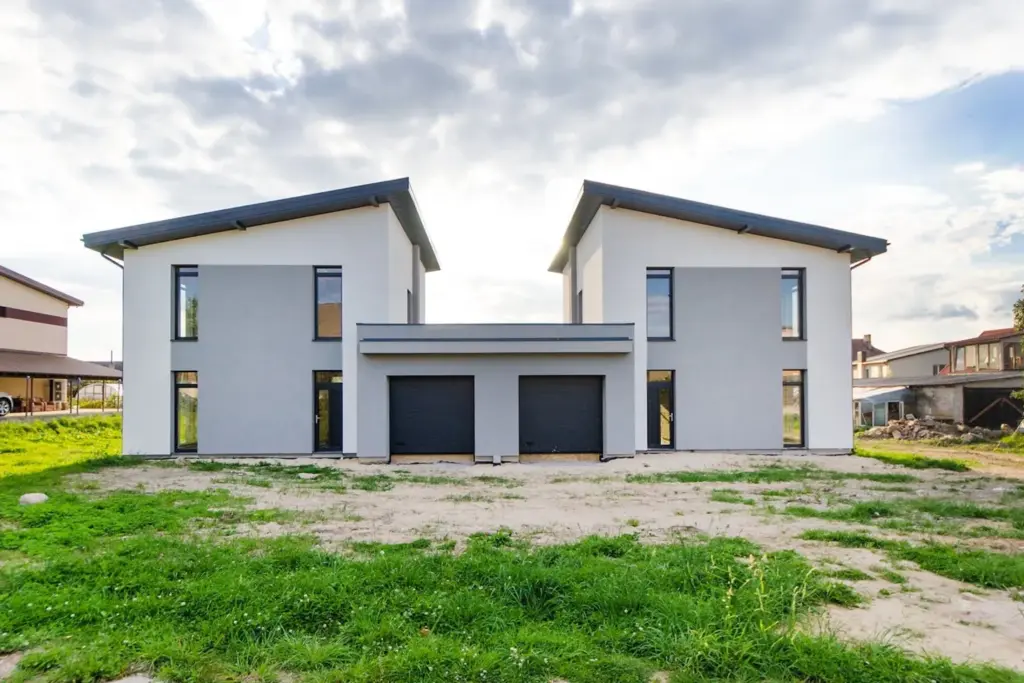
Austin’s median duplex sold for $557,500 in March 2026, up 13.8% year over year, and the average rental unit in the metro pulls $1,385 per month. Those two numbers explain why house hacking is the single most powerful wealth-building strategy available to first-time buyers in Central Texas right now. Buy a duplex with an FHA loan at 3.5% down, live in one side, rent the other, and your tenant covers most (or all) of your mortgage payment.
This is not a theoretical exercise. FHA loan limits in Travis County allow up to $731,700 for a duplex in 2026, which covers the vast majority of Austin’s two-unit inventory. A buyer with a 580 credit score can put down roughly $19,500 on a $557,500 duplex, collect $1,400 or more in rent from the other unit, and live in a home they own for a fraction of what they would pay to rent a comparable apartment.
Austin’s combination of strong rental demand, relatively affordable multifamily inventory outside the urban core, and relaxed ADU regulations makes it one of the best house hacking markets in the country.
Ed Neuhaus, broker of Neuhaus Realty Group, notes that house hacking is increasingly popular among Austin buyers in their late twenties and early thirties. “We are seeing more buyers run the rental numbers before they even tour a property. They are treating their first home purchase as an investment from day one, and in a market with 5.4 months of inventory, they have the leverage to find the right deal.”
What Is House Hacking?
House hacking means buying a property you live in and renting part of it to offset your housing costs. The concept is straightforward, but the execution takes several forms. You might buy a duplex and rent one unit. You might build a backyard ADU and lease it to a long-term tenant. You might rent spare bedrooms to roommates. You might even list part of your home as a short-term rental on Airbnb, though Austin’s STR regulations add complexity to that approach.
The defining feature that separates house hacking from traditional real estate investing is owner occupancy. Because you live in the property, you qualify for residential financing with lower down payments, better interest rates, and more favorable terms than pure investment loans require. An FHA loan on a duplex needs 3.5% down. A conventional investment loan on that same duplex would require 15% to 25% down and carry a rate 0.5% to 1% higher.
The goal varies by buyer. Some want to live for free by having rental income cover the entire mortgage. Others simply want to reduce their housing costs enough to accelerate savings. A few are thinking bigger: buy a house hack, live there for 12 months to satisfy the owner-occupancy requirement, then move out, convert the whole property to a rental, and repeat the process with a new owner-occupied purchase.
Five House Hacking Strategies That Work in Austin
Not every house hack looks the same. The right strategy depends on your budget, your tolerance for sharing space, and the type of property you can find. Here are the five approaches that produce real results in the Austin market.
Strategy 1: Buy a Duplex, Triplex, or Fourplex
The classic house hack. You buy a two-to-four-unit property, live in one unit, and rent the rest. This is the highest-impact strategy because each additional unit generates its own income stream, and you can finance the entire building with a single residential mortgage.
Austin’s multifamily market offers real options. Duplexes in B-class neighborhoods (think Montopolis, St. Elmo, Rundberg, and parts of South Austin near 78741) trade between $500,000 and $650,000. East side neighborhoods like Del Valle and Montopolis still have duplexes and fourplexes in the $400,000 to $600,000 range. Premium areas like East Austin (78702) and Hyde Park push past $800,000 for a well-located two-unit property.
Triplexes and fourplexes are rarer in Austin proper but appear more frequently in Round Rock, Pflugerville, and Georgetown. A fourplex generating three rents can cover an entire mortgage payment and then some. For a deeper comparison of multifamily vs. single-family investing, see our breakdown at Small Multifamily vs. Single-Family Investing.
Strategy 2: Build or Convert an ADU
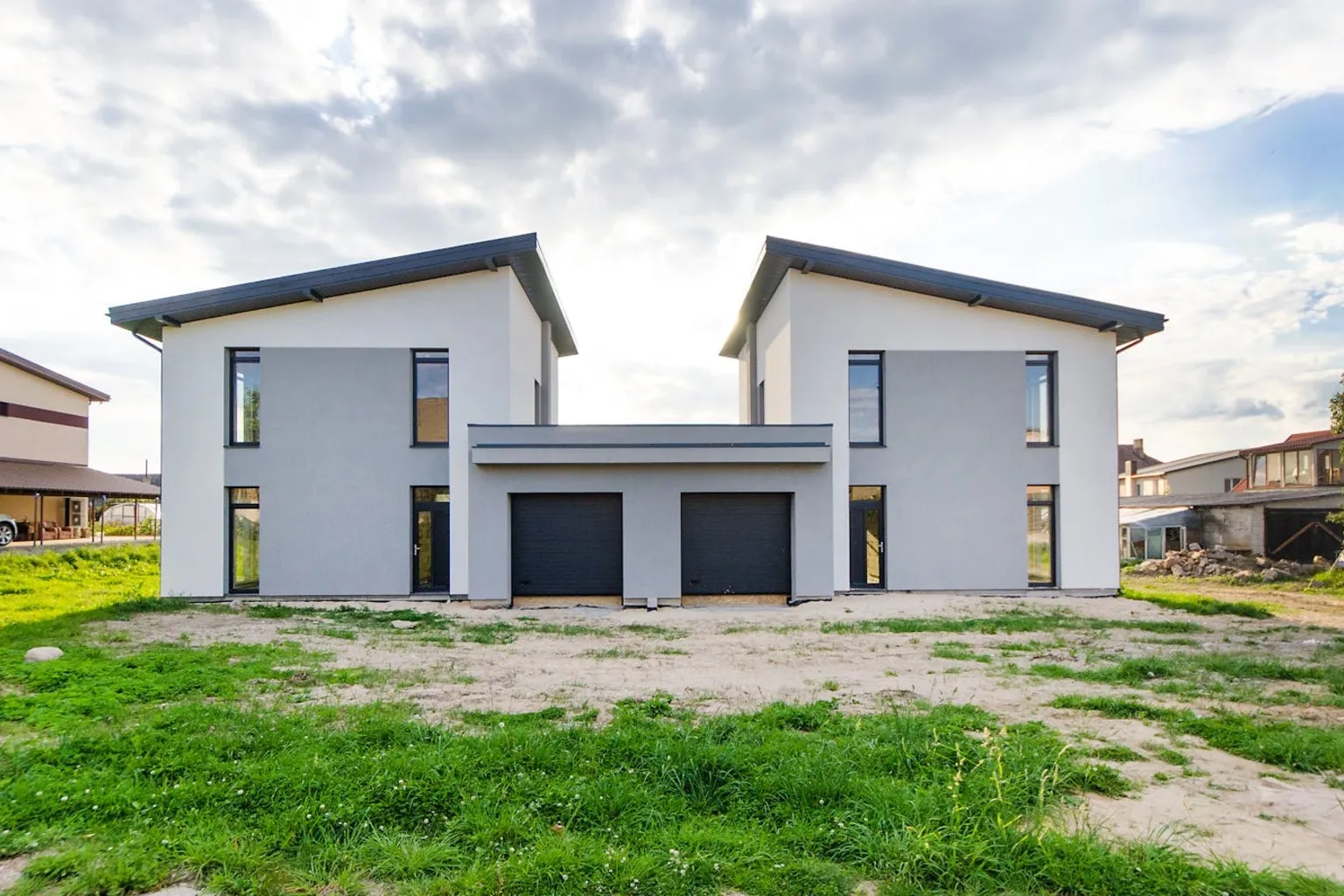
Austin dramatically expanded ADU eligibility in recent years. The minimum lot size dropped to 2,500 square feet, which opened backyard cottages to a huge portion of the city’s residential parcels. A typical permitted ADU runs 550 to 750 square feet, costs $150,000 to $250,000 to build, and generates $1,500 to $2,500 per month in long-term rental income depending on location and finishes.
The math can be compelling. If you build a 650-square-foot ADU for $180,000 and rent it for $1,800 per month, your annual gross income is $21,600 against a construction cost you can finance with a home equity loan or renovation loan. That is a 12% gross yield before expenses, and you still live in your primary home with zero lifestyle disruption.
One critical restriction: ADUs built after October 1, 2015 can only be used as short-term rentals for a maximum of 30 days per calendar year. Long-term rental (leases of 30 days or more) has zero restrictions. For the full regulatory breakdown, see our Complete Guide to ADUs and Guest Houses in Austin.
Strategy 3: Rent Spare Bedrooms
The lowest-barrier entry point. You buy a three- or four-bedroom home, live in the primary suite, and rent the other bedrooms to individual tenants. In Austin, individual room rentals typically run $800 to $1,200 per month depending on location, included utilities, and shared amenities.
A four-bedroom house near the UT campus or in North Austin where you rent three bedrooms at $900 each brings in $2,700 per month. If your total PITI payment is $2,800, you are living in your own home for $100 per month out of pocket.
The tradeoff is lifestyle. You share your kitchen, living room, and common areas with tenants. This works best for buyers in their twenties or early thirties who are comfortable with roommates and want to aggressively save for their next property. It works poorly for anyone who values privacy or plans to live with a partner. For more on this growing trend, see The Rise of Co-Living Spaces.
Strategy 4: Mid-Term or Short-Term Rental
You buy a home with a guest suite, casita, or garage apartment and rent it on a nightly or monthly basis. Mid-term rentals (30+ day stays) have surged in popularity because they attract traveling nurses, corporate relocators, and remote workers while avoiding Austin’s STR licensing requirements.
Austin’s short-term rental regulations are strict and getting stricter. Type 1 STR licenses (owner-occupied, rent while you are away) are the only option for most house hackers, and the City of Austin charges $836.30 for a new license. Starting July 1, 2026, platforms like Airbnb and Vrbo will begin delisting unlicensed properties within 10 days of receiving a city request. The days of operating without a license are ending.
Mid-term rentals sidestep the licensing issue entirely. A furnished one-bedroom guest suite in South Austin or near a hospital can pull $2,000 to $3,000 per month on a 30-day minimum stay. For the full STR landscape, read our Complete Guide to Airbnb and Short-Term Rental Investing in Austin.
Strategy 5: Garage Conversion or Casita Addition
A middle ground between building a full ADU and renting bedrooms. Converting a detached garage into a livable unit or adding a small casita to your property creates a separate rental space without the $200,000+ cost of a ground-up ADU. Garage conversions in Austin typically run $40,000 to $80,000 depending on whether the structure needs foundation work, plumbing, and HVAC.
The permit requirements are the same as for an ADU, and the rental income potential is similar for comparable square footage. The advantage is cost. The disadvantage is that most garage conversions yield smaller, less polished units than purpose-built ADUs, which limits rent potential.
How to Finance a House Hack in Austin
Financing is the engine that makes house hacking work. The ability to use owner-occupied loan programs on income-producing property is the entire advantage. Here are the main options.
FHA Loans: 3.5% Down on a Duplex
The FHA 203(b) loan is the house hacker’s best friend. You can buy a one-to-four-unit property with just 3.5% down as long as you live in one unit as your primary residence for at least 12 months. The same loan program that finances single-family homes works on duplexes, triplexes, and fourplexes.
| Property Type | 2026 FHA Limit (Travis County) | 3.5% Down Payment |
|---|---|---|
| Single Family | $571,550 | $20,004 |
| Duplex | $731,700 | $25,610 |
| Triplex | $884,450 | $30,956 |
| Fourplex | $1,099,150 | $38,470 |
The $731,700 duplex limit covers the vast majority of Austin’s two-unit inventory. Even in desirable East Austin, most duplexes trade below this threshold. For a full breakdown of FHA multifamily requirements, see FHA Loans for Multifamily: Buy a Duplex With 3.5% Down.
FHA loans require mortgage insurance (MIP): 1.75% upfront plus 0.55% annually on a 30-year loan with less than 5% down. On a $557,500 duplex, that adds roughly $255 per month. MIP stays for the life of the loan unless you refinance to a conventional loan after building 20% equity.
Lenders count 75% of the projected rental income from the non-owner units toward your qualifying income. A duplex where the other unit rents for $1,400 per month adds $1,050 to your qualifying income, which can make the difference between approval and denial for many first-time buyers.
One important distinction: duplexes are exempt from the FHA self-sufficiency test. Triplexes and fourplexes must pass it. The gross rental income from all non-owner units (reduced by 25% for vacancy) must cover the entire monthly PITI payment. If it does not, the loan will not be approved regardless of the borrower’s personal income.
Conventional Loans: 15% to 25% Down
Conventional loans offer more flexibility and no permanent mortgage insurance, but require larger down payments for multi-unit properties. Owner-occupied duplexes need 15% down. Triplexes and fourplexes need 25% down. Rates are typically 0.25% to 0.5% better than FHA once you factor in MIP savings.
For buyers with strong credit (740+) and healthy savings, conventional financing may cost less over the life of the loan. The higher down payment means less monthly cash flow in the short term but no MIP drag.
VA Loans: Zero Down for Veterans
Eligible veterans and active-duty military can buy a one-to-four-unit property with zero down payment and no mortgage insurance through a VA loan. This is the single most powerful house hacking tool available to anyone who qualifies. A veteran could buy a $557,500 duplex in Austin with zero down, collect $1,400 per month in rent, and have a total monthly cost hundreds of dollars below renting a comparable apartment.
VA loans do charge a funding fee (2.15% for first-time use with no down payment), which can be rolled into the loan. For the full VA playbook, see our Complete Guide to Getting a Mortgage in Austin.
DSCR Loans: For Your Next Property
Once you have completed your first house hack and are ready to buy your second investment property, DSCR (Debt Service Coverage Ratio) loans let you qualify based on the property’s rental income rather than your personal income. Rates run 6.0% to 7.5% with 20% to 25% down, but there is no income verification, no employment verification, and no limit on the number of properties. For details, see DSCR Loans Explained.
Austin Multifamily Market: What Properties Cost in 2026
Understanding the current market is essential for running accurate numbers. Here is where Austin’s multifamily inventory stands.
| Area | Duplex Price Range | Typical Rent Per Unit | Notes |
|---|---|---|---|
| East Austin (78702, 78721) | $650,000 – $850,000 | $1,400 – $1,800 | Highest appreciation, tight inventory |
| South Austin (78741, 78745) | $500,000 – $650,000 | $1,200 – $1,600 | Strong rental demand, good transit |
| North Austin (78753, 78758) | $450,000 – $580,000 | $1,100 – $1,400 | Near tech corridor, steady tenants |
| Del Valle / Montopolis | $400,000 – $550,000 | $1,000 – $1,300 | Most affordable, improving rapidly |
| Round Rock / Pflugerville | $420,000 – $560,000 | $1,100 – $1,400 | Good schools, suburban demand |
| Cedar Park / Leander | $440,000 – $580,000 | $1,200 – $1,500 | Limited multifamily supply |
The metro-wide median multifamily sold price hit $557,500 in March 2026, according to Austin Board of Realtors MLS data. Supply has been growing: 5.4 months of inventory across the metro gives buyers meaningful negotiating power. Multiple-offer situations on investment-grade multifamily have largely disappeared outside the hottest pockets of East Austin.
Rents have softened 4% to 7% year over year in many areas as new apartment supply hit the market. This is good news for house hackers buying today. Lower rents mean lower purchase prices, while the long-term rental demand in Austin (driven by continued population growth and job creation from Apple, Tesla, Samsung, and the broader tech ecosystem) suggests rents will stabilize and grow again within 12 to 24 months.
Cash Flow Projections: Real Numbers for Three Scenarios
Theory is nice. Numbers are better. Here are three realistic house hacking scenarios for the Austin market in 2026.
Scenario 1: FHA Duplex in South Austin
| Line Item | Amount |
|---|---|
| Purchase Price | $550,000 |
| Down Payment (3.5% FHA) | $19,250 |
| Loan Amount | $530,750 + $9,288 MIP = $540,038 |
| Interest Rate | 6.75% |
| Monthly P&I | $3,503 |
| Property Tax (est. 2.1%) | $963/mo |
| Insurance | $250/mo |
| MIP (0.55%) | $247/mo |
| Total Monthly PITI + MIP | $4,963 |
| Rental Income (Unit B) | $1,400/mo |
| Your Net Housing Cost | $3,563/mo |
| Comparable Apartment Rent | $1,800/mo |
| Monthly Savings vs. Renting | -$1,763 |
Wait. You are paying $1,763 more than renting? Yes, on paper. But you are also building equity ($680/mo in principal paydown in year one), gaining tax deductions on the rental side, and your tenant is covering 28% of your total payment. Over five years, if the property appreciates at even 3% annually, you will have built roughly $130,000 in equity while your renter neighbor built nothing. The real “cost” after equity and tax benefits is closer to $800 per month, well below the $1,800 apartment.
If you find a duplex where Unit B rents for $1,800 or higher (possible in East Austin or near UT), the out-of-pocket drops to $3,163, and the true cost after equity approaches break-even.
Scenario 2: Single-Family Home with ADU
| Line Item | Amount |
|---|---|
| Home Purchase Price | $425,000 |
| Down Payment (5% Conventional) | $21,250 |
| ADU Construction Cost | $180,000 (HELOC at 8.5%) |
| Monthly Mortgage (P&I + PMI) | $2,850 |
| Property Tax (est. 2.1%) | $744/mo |
| Insurance | $200/mo |
| HELOC Payment (interest only) | $1,275/mo |
| Total Monthly Costs | $5,069 |
| ADU Rental Income | $1,800/mo |
| Your Net Housing Cost | $3,269/mo |
The ADU route requires more capital and a construction phase, but it offers complete privacy (separate structure) and the potential for stronger appreciation. A property with a permitted, income-producing ADU typically appraises 10% to 15% higher than the same home without one. For construction details, see our ADU Guide.
Scenario 3: Room Rental in a Four-Bedroom Home
| Line Item | Amount |
|---|---|
| Purchase Price | $400,000 |
| Down Payment (3.5% FHA) | $14,000 |
| Monthly P&I + MIP | $2,757 |
| Property Tax (est. 2.0%) | $667/mo |
| Insurance | $180/mo |
| Total Monthly PITI + MIP | $3,604 |
| Rental Income (3 rooms x $900) | $2,700/mo |
| Your Net Housing Cost | $904/mo |
The room rental strategy gets you closest to “living for free.” At $904 per month all-in for your housing, you are paying less than half what a one-bedroom apartment costs in Austin. The catch is sharing your living space. But for a 27-year-old saving aggressively, this is how you accumulate a down payment for property number two in 18 to 24 months.
Best Austin Neighborhoods for House Hacking in 2026
Not every neighborhood works equally well. The ideal house hacking neighborhood has affordable multifamily inventory (or lots suitable for ADUs), strong rental demand, and upside for appreciation. Here are the areas worth targeting.
South Austin (78741, 78745). The corridor from St. Elmo to Stassney along South Congress and South First is packed with rental demand. Duplexes trade in the $500,000 to $650,000 range. Proximity to downtown, Zilker Park, and South Congress shopping keeps tenant interest high. The area is steadily gentrifying, which supports long-term appreciation. See listings in 78741 and 78745.
East Austin (78702, 78721). The highest rent-per-unit in the metro, but also the highest prices. East Austin house hacks work for buyers with larger budgets who want maximum appreciation upside. A duplex here might cost $750,000 but rent for $1,800 per unit. The cap rate is thin, but the equity growth potential is significant.
North Austin / Rundberg Corridor (78753, 78758). The most underrated house hacking zone. Duplexes in the $450,000 to $550,000 range with rents of $1,100 to $1,400 per unit. Proximity to the Domain, the Q2 tech corridor, and major employers drives consistent tenant demand. This area has the best cash flow to entry cost ratio in the metro.
Del Valle / Southeast Austin. The most affordable entry point. You can find duplexes and fourplexes below $500,000 with rents of $1,000 to $1,300 per unit. The tradeoff is longer commute times and fewer amenities, but the Tesla Gigafactory and Samsung’s Taylor fab are driving job growth and infrastructure investment in this corridor.
Round Rock and Pflugerville. Suburban house hacking for buyers who want good schools and newer construction. Duplexes trade in the $420,000 to $560,000 range. Tenant demand is driven by Dell, Apple, and the broader Parmer Lane tech corridor. See available homes in Round Rock and Pflugerville.
Cedar Park and Leander. Limited multifamily supply, but excellent for ADU strategies. Large lots, relaxed Williamson County permitting, and strong rental demand from young professionals and tech workers. Check Cedar Park listings for properties with ADU potential.
Finding Hackable Properties in Austin
The MLS is the starting point, but hackable properties do not always announce themselves. Here is how to find them.
Search for 2-4 unit properties explicitly. Filter by “multifamily” or “duplex” in the MLS. Many agents overlook this property type, which means less competition for buyers who specifically target it.
Look for single-family homes with ADU potential. Large lots (6,000+ square feet), detached garages, and existing guest houses or mother-in-law suites signal ADU opportunity. The 2,500-square-foot minimum lot size in Austin means most urban parcels qualify.
Watch for homes with extra bedrooms. Four- and five-bedroom homes in areas with rental demand (near UT, near hospitals, near tech campuses) are natural room-rental candidates.
Consider properties with deferred maintenance. A duplex that needs $30,000 in cosmetic work might sell for $50,000 below market. FHA 203(k) renovation loans let you finance the purchase and rehab in a single loan, and the post-renovation value can create instant equity.
Work with an agent who understands investment math. Not every buyer’s agent can run cash flow projections, analyze cap rates, or identify ADU-eligible lots. Ed Neuhaus and the team at Neuhaus Realty Group specialize in helping buyers evaluate properties as both a home and an investment, running the numbers on rental income, financing scenarios, and tax implications before you make an offer.
Legal Considerations for Austin House Hackers
House hacking sits at the intersection of homeownership and landlording, which means you need to understand both sets of rules.
Landlord-Tenant Law in Texas
Once you have a tenant, you are a landlord, and Texas Property Code governs your relationship. Key points:
- Security deposits have no statutory limit in Texas, but must be returned within 30 days of move-out (minus documented deductions).
- For eviction, you must give a 3-day written notice to vacate before filing a forcible entry and detainer suit. Recent changes under SB 38 and SB 1333 tightened squatter protections. See Texas Squatter and Eviction Laws 2026 for the latest updates.
- You cannot lock out a tenant or shut off utilities, even if they stop paying rent. Self-help eviction is illegal in Texas.
- Written leases are not legally required, but operating without one is reckless. Always use a written lease that specifies rent amount, due date, late fees, maintenance responsibilities, and termination terms.
Short-Term Rental Regulations
If you plan to rent any portion of your home on a nightly or weekly basis, you need a City of Austin STR license. Type 1 licenses (owner-occupied, you can rent while away) are the relevant category for most house hackers. The license costs $836.30 for new applications and $385.30 for renewals. Processing takes 4 to 10 weeks.
Starting July 1, 2026, Austin will begin requesting that platforms delist unlicensed STR properties within 10 days. The city estimates that the majority of current STRs operate without licenses. This enforcement push will reduce supply and potentially increase rates for licensed operators, but it also means you cannot fly under the radar. For full details, see our STR Investing Guide.
Mid-term rentals (30+ day stays) are not subject to STR licensing in Austin, making them the safest rental strategy for house hackers who want to avoid regulatory complexity.
HOA Restrictions
Many HOAs in Austin prohibit renting rooms, operating STRs, or even building ADUs. Some limit the number of unrelated occupants in a home. Before buying in a deed-restricted community, read the CC&Rs cover to cover. If you are buying a condo, check the HOA’s rental cap and leasing restrictions. Some buildings cap rental units at 25% of total units. For more, see our Complete Guide to HOAs in Austin.
Insurance
Standard homeowners insurance (HO-3) covers owner-occupied property. Once you start renting part of your home, you need to inform your insurer. For duplexes, you will need a landlord or dwelling policy that covers both units. For room rentals, you may need a rider on your existing policy. Tenants should always carry renter’s insurance.
If you operate an STR, you need commercial-grade liability coverage. Airbnb’s AirCover provides some protection, but experienced hosts carry a separate $1 million umbrella policy.
Tax Benefits of House Hacking
House hacking unlocks tax advantages that pure homeowners miss entirely. You get the benefits of both homeownership and rental property ownership, though the allocation requires careful tracking.
Schedule E: Reporting Rental Income and Expenses
All rental income must be reported on Schedule E of your federal tax return. But you also get to deduct expenses proportional to the rented portion of the property. If you rent out 50% of a duplex, you deduct 50% of mortgage interest, property taxes, insurance, utilities, repairs, and maintenance as rental expenses.
| Deductible Expense | Allocation Method | Example (50% Rental) |
|---|---|---|
| Mortgage Interest | By unit or sqft | $18,000 x 50% = $9,000 |
| Property Taxes | By unit or sqft | $11,550 x 50% = $5,775 |
| Insurance | By unit or sqft | $3,000 x 50% = $1,500 |
| Repairs (rental unit) | 100% if specific to rental | $2,000 |
| Depreciation | Rental portion of building value | See below |
Depreciation: The Paper Loss That Reduces Your Tax Bill
The IRS allows you to depreciate the rental portion of your building’s value over 27.5 years. Only the building value is depreciable (not land). If your $550,000 duplex has a land value of $150,000, the building value is $400,000. The rental half ($200,000) depreciates at $7,273 per year, creating a paper loss that offsets rental income and potentially other income.
For house hackers with adjusted gross income under $100,000, the IRS allows up to $25,000 in passive activity rental losses to offset W-2 or other active income. This is a significant tax benefit that most homeowners do not realize they have access to. The allowance phases out between $100,000 and $150,000 AGI.
For more advanced depreciation strategies, including cost segregation studies that can accelerate deductions, see Cost Segregation Studies: Accelerate Depreciation and Cut Your Tax Bill.
What Happens When You Sell
Two things happen at sale that require planning.
First, the Section 121 capital gains exclusion ($250,000 single, $500,000 married) applies only to the portion of the property you used as your primary residence. If you lived in one unit of a duplex and rented the other, only half the gain qualifies for the exclusion. The other half is taxable.
Second, any depreciation you claimed on the rental portion is “recaptured” at a rate of up to 25% when you sell. If you depreciated $36,000 over five years, you owe up to $9,000 in recapture tax at sale. This is not a reason to avoid depreciation. The time value of the deductions during ownership almost always exceeds the recapture cost at sale. For the full picture, see Depreciation Recapture Tax: What It Is and How Investors Plan Around It.
Common Mistakes New House Hackers Make
House hacking is forgiving compared to pure investment real estate, but these errors still cost money.
Not running the numbers before buying. Falling in love with a duplex and ignoring the math is the fastest way to end up with a property that bleeds cash. Run every deal through a spreadsheet: purchase price, financing terms, expected rent, vacancy (assume 5% to 8%), maintenance (1% of value annually), property management (even if you self-manage, budget 8% as a test), insurance, taxes, and capital expenditure reserves. If the numbers do not work, keep looking.
Underestimating vacancy and turnover costs. Even in Austin’s strong rental market, budget for one month of vacancy per year. Turnover costs (cleaning, paint touch-up, minor repairs, marketing) typically run $500 to $1,500 per turn. A unit that rents for $1,400 per month with 8% vacancy and $1,000 in annual turnover costs yields an effective rent of $1,175 per month, not $1,400.
Skipping the landlord learning curve. Tenant screening, lease agreements, maintenance requests, rent collection, and the occasional difficult conversation are part of the package. Read the Texas Property Code. Use a standardized lease from the Texas Real Estate Commission or Texas Apartment Association. Screen every tenant with a credit check, criminal background check, income verification (3x rent minimum), and landlord references.
Ignoring insurance requirements. A standard HO-3 policy does not cover rental activities. If a tenant’s guest slips on your stairs and your insurer discovers you were renting without disclosure, your claim gets denied. Update your policy before your first tenant moves in.
Choosing the wrong neighborhood. The cheapest duplex is not always the best investment. A $380,000 duplex in an area with declining rents and high crime may look like a deal, but the headaches (property damage, tenant turnover, difficulty attracting quality tenants) can erase the savings. Target neighborhoods with stable or growing demand, proximity to employment centers, and a mix of owner-occupied and rental properties.
Not planning the exit. Every house hack should have a clear exit strategy. Will you keep the property as a rental when you move out? Will you sell and 1031 exchange into a larger property? Will you refinance to pull equity for your next purchase? Having a plan from day one shapes which property you buy and how you structure the financing. For exchange strategies, see our Complete Guide to 1031 Exchanges in Texas.
From First House Hack to Real Estate Portfolio
The real power of house hacking is not the first property. It is the repeatable framework.
The typical progression looks like this:
Year 1: Buy an owner-occupied duplex with FHA (3.5% down). Live in one unit, rent the other. Save aggressively from reduced housing costs.
Year 2: After meeting the 12-month occupancy requirement, move out. Convert both units to rentals. The property now cash flows as a full investment. Buy your next owner-occupied property (you can only have one FHA loan at a time, but you can use conventional owner-occupied financing for your next purchase with as little as 5% down).
Year 3-4: Repeat. By year four, you could own three properties: your first duplex (now fully rented), your second house hack (partially rented), and the beginnings of a real estate portfolio generating passive income.
This is exactly how thousands of investors built their portfolios, and Austin’s market supports it with strong rental demand, consistent appreciation, and accessible financing. For the long-term strategy, see Buy and Hold Real Estate: The Complete Strategy Guide and our Complete Guide to Investment Property in Austin.
The key metric is velocity: how fast can you save enough for the next down payment? A house hacker paying $900 per month instead of $1,800 saves $10,800 per year in housing costs alone. Combined with principal paydown and modest appreciation, a disciplined house hacker can accumulate enough for a second property in 18 to 24 months.
Step-by-Step: Your First House Hack in Austin
Ready to start? Here is the process, condensed.
- Get pre-approved. Talk to an FHA-approved lender who understands investment property. Have them run the numbers with and without projected rental income. See our Complete Guide to Getting a Mortgage in Austin for lender selection tips.
- Define your strategy. Duplex? ADU? Room rental? Your budget and lifestyle preferences determine which path to take.
- Find a property. Work with an agent who can identify hackable properties, run cash flow projections, and spot ADU potential on single-family lots.
- Run the numbers. Use the scenarios in this guide as a template. Be conservative on rent estimates and generous on expense assumptions.
- Make an offer. In today’s buyer-friendly market (5.4 months of inventory), you have room to negotiate. Ask for seller concessions toward closing costs, which FHA allows up to 6% of the purchase price.
- Close and move in. Budget for closing costs of 2% to 4% of the purchase price. For a full breakdown, see our Complete Guide to Closing Costs in Texas.
- Prepare the rental unit. Clean, paint, photograph, and list. Screen tenants carefully. Sign a lease.
- Collect rent and track expenses. Use property management software (Stessa, Avail, or TurboTenant are all free) to track income, expenses, and maintenance requests from day one. You will need clean records for tax time.
- Plan your next move. Start saving for property number two immediately. The 12-month clock on your occupancy requirement is already ticking.

Frequently Asked Questions
Next Steps
House hacking is not a shortcut. It requires discipline, basic landlording skills, and the willingness to share your living situation (at least temporarily) in exchange for accelerated wealth building. But the numbers do not lie: a buyer who house hacks their first purchase in Austin saves thousands per year in housing costs, builds equity from day one, and creates a repeatable system for growing a real estate portfolio.
The best time to start is when you have stable income, a funded emergency reserve, and the willingness to learn. The Austin market in 2026 offers the inventory, the financing tools, and the rental demand to make it work.
For a personalized cash flow analysis on any property in the Austin metro, reach out to Neuhaus Realty Group. We run the numbers on every deal so you know exactly what to expect before you make an offer.